A queen bee develops from a regular female larva that workers feed royal jelly throughout its development.
Process
- Workers build large queen cells.
- A fertilized egg or young larva (under 3 days old) is fed only royal jelly.
- The larva becomes a queen in 16 days.
Why different
A worker larva gets royal jelly for 3 days, then pollen and honey. This changes gene expression.
Queen facts
A queen can live 3 to 5 years and lay up to 2,000 eggs a day.
Hive
There is one queen per hive.
Larval feeding
A queen is made from an ordinary fertilized egg, identical to those that develop into worker bees. What differs is the diet. Larvae chosen to be queens are fed royal jelly exclusively throughout their larval stage, while worker larvae receive royal jelly only for the first 3 days and then switch to pollen and honey (bee bread).
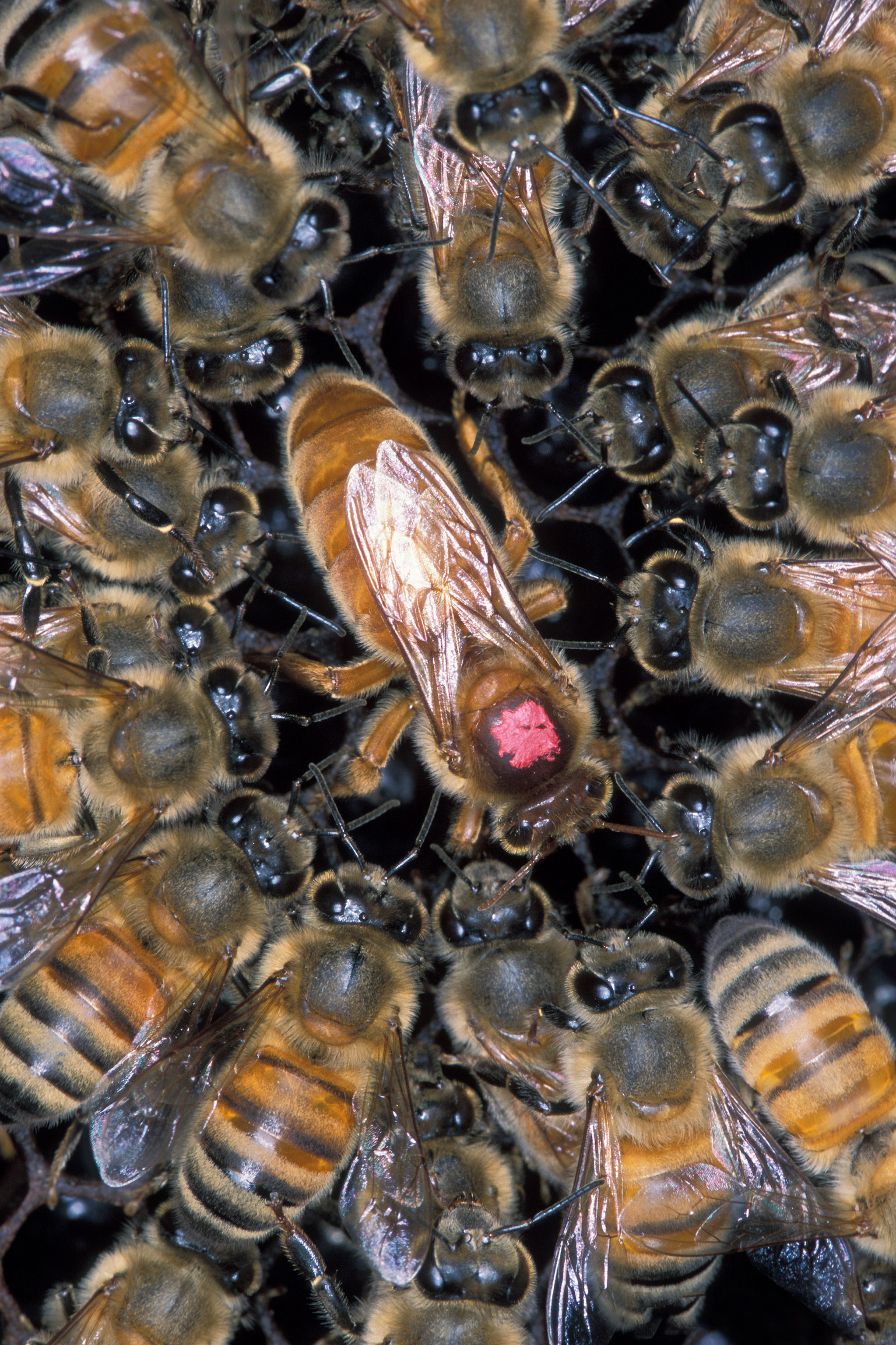
Royal jelly
Royal jelly is a protein rich secretion from glands in the heads of young worker bees. It contains proteins (including royalactin), sugars, fatty acids and vitamins. Studies suggest it triggers epigenetic changes that make a larva develop ovaries and a larger body.
Queen cells
Workers build special large, peanut shaped cells that hang vertically. Queens develop in 16 days from egg to adult, compared with 21 days for workers and 24 days for drones.
When new queens are raised
- Supersedure: the colony replaces a failing queen.
- Swarming: the colony produces new queens before part of the colony leaves with the old queen.
- Emergency: if the queen dies suddenly, workers convert young larvae into queens.

Mating flights
A virgin queen takes mating flights a few days after emerging and mates with about 10 to 20 drones in the air at 10 to 40 feet high, storing sperm for life. She then returns to the hive and starts laying eggs.
Queen facts
A queen can lay up to 2,000 eggs per day in peak season, and live 3 to 5 years, while workers live 6 weeks in summer. A hive has one queen, 20,000 to 60,000 workers and a few hundred drones.
Pheromones
The queen produces a pheromone (queen mandibular pheromone) that suppresses ovary development in workers and keeps the colony cohesive.
Beekeeping
Beekeepers often buy mated queens, and requeen to maintain strong colonies.
Royal jelly and development
A queen bee develops from a fertilized egg identical to a worker egg. The difference lies in diet and the cell: larvae chosen to become queens are fed royal jelly, a protein rich secretion from nurse bees, throughout their larval stage, while worker larvae receive it for only the first three days and then get pollen and honey. Queen cells are larger, peanut shaped and hang vertically. A queen emerges about 16 days after the egg is laid, compared with 21 days for workers and 24 for drones.

Mating and life of a queen
A new queen takes mating flights about a week or two after emerging, mating with roughly 10 to 20 drones in the air, and stores the sperm for life. She can lay 1,500 to 2,000 eggs a day at peak and may live 2 to 5 years, while workers live about 6 weeks in summer. Queen pheromones keep workers organized and suppress other queens. Colonies raise new queens when the old queen fails, in swarming or when the hive has no queen. Beekeepers can buy mated queens and replace them every year or two.
Based on data from university bee research labs and the USDA