Salaried pay is a fixed yearly amount divided into regular paychecks, regardless of the exact hours you work in a given week.
How it works
A salaried employee earns a fixed annual amount, paid in regular installments (weekly, biweekly, semi-monthly or monthly), no matter the hours worked.
Example
$52,000 a year paid biweekly is $2,000 gross per paycheck (26 paychecks).
Overtime
Under the Fair Labor Standards Act (FLSA), salaried workers earning below the exempt threshold ($844 a week, or $43,888 a year, as of 2024; the higher 2024 rule was vacated) must be paid overtime. Exempt employees need a salary and duties test.
Taxes
Employers withhold taxes, Social Security and Medicare from each check.
Pros and cons
Stability but no overtime in exempt roles.
Convert
Hourly equivalent = annual salary / 2,080.
How it works
A salaried employee is paid a fixed amount per year, divided into equal paychecks (weekly, biweekly, semi-monthly or monthly), regardless of the exact number of hours worked. Salary is set by the job, not by time. Under the Fair Labor Standards Act (FLSA), employees paid a salary may be exempt from overtime if they meet both a salary level test and a duties test. The minimum salary for exemption was $844 a week ($43,888 a year) in 2024, rising to $1,128 a week ($58,656 a year) from July 2024, though the rule was struck down by a federal court in November 2024.
Example
A salary of $65,000 a year is paid as:

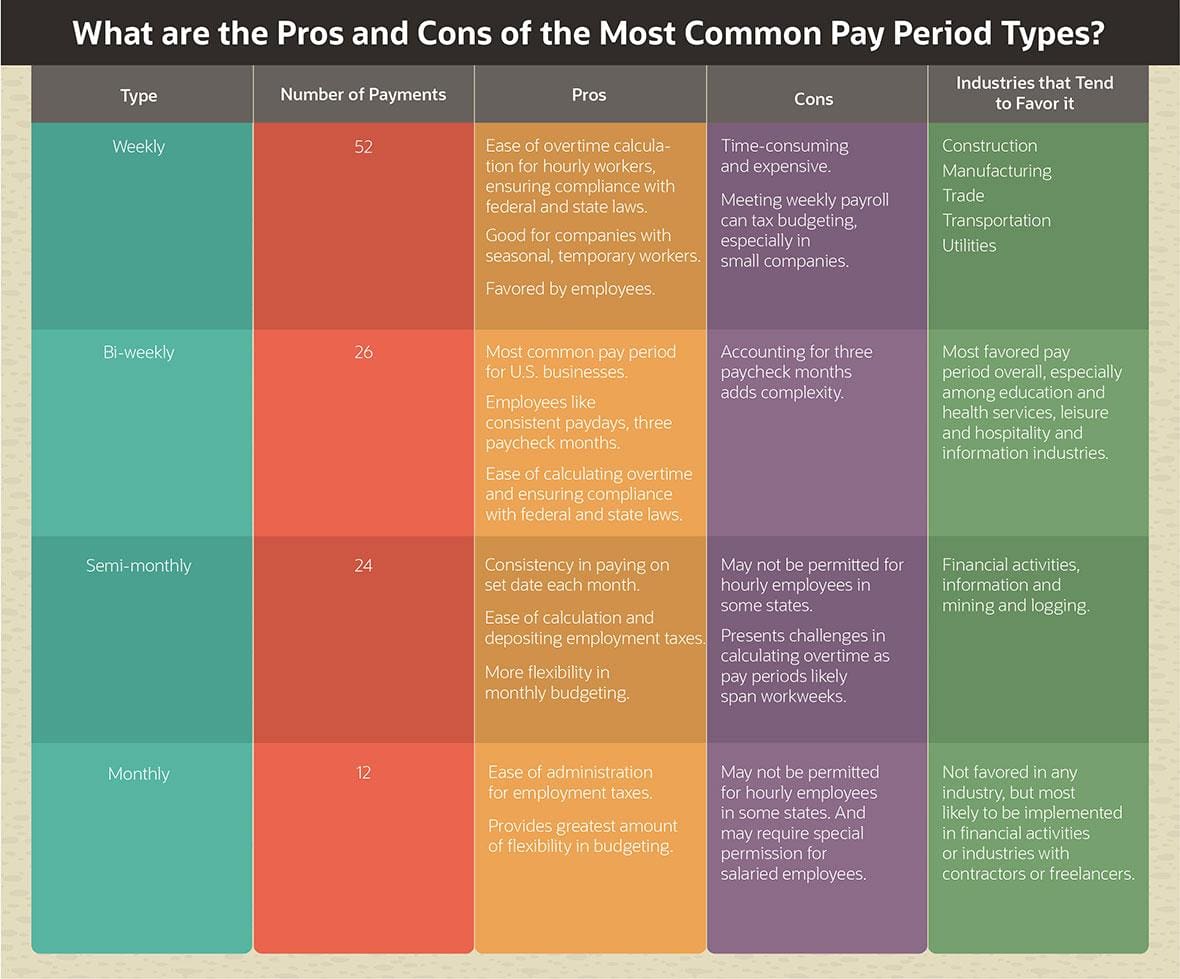
- 52 weekly checks of $1,250 gross.
- 26 biweekly checks of $2,500 gross.
- 24 semi-monthly checks of $2,708.33 gross.
- 12 monthly checks of $5,416.67 gross.
After taxes and deductions, the net pay is typically 70% to 80% of gross.
Overtime
Non-exempt salaried workers are still owed overtime at 1.5 times their regular rate for hours over 40 a week. Exempt workers (typically executive, administrative or professional roles meeting the duties test) are not eligible for overtime, even if they work 50 hours. An employer cannot make deductions from an exempt salary for partial-day absences in most cases.
Taxes
Employers withhold federal income tax based on your W-4, Social Security (6.2%) and Medicare (1.45%), plus state taxes and benefit deductions. Salary is reported on Form W-2.
Pros and cons
- Pros: stable income, often benefits such as health insurance, paid leave and a retirement match, flexibility, and no loss of pay for short days.
- Cons: long hours at no extra pay, no overtime, expectations to be available, and an effective hourly rate that falls as hours rise.
Convert
To find the hourly equivalent, divide your annual salary by the hours worked in a year. For 40-hour weeks, that is 2,080 hours. A $65,000 salary equals $31.25 an hour. If you work 50 hours a week, it is $25 an hour.

Legal rules and benefits
A salaried exempt employee is paid a fixed amount regardless of hours worked and is generally not eligible for overtime. Under federal law, the salary threshold for exemption is currently 684 USD per week, or 35,568 USD per year, after a 2024 increase to 844 USD per week was struck down by a federal court in November 2024. The employee must also pass a duties test as executive, administrative or professional. Non exempt salaried employees may still be entitled to time and a half after 40 hours. Salary paid is typically divided by 24 or 26 pay periods, or monthly, and taxes are withheld according to W-4 settings. To compare with hourly pay, divide annual salary by 2,080 hours, so 62,400 USD equals 30 USD per hour. Salaried jobs often include health insurance, paid leave and retirement matching, though benefits vary. States such as California set higher exempt salary floors.
Based on data from the US Department of Labor and the IRS