A bruise usually appears within minutes to a few hours, and darkens over the first day.
Timing
A bruise appears within minutes to a few hours after the injury as blood leaks from broken capillaries under the skin. Deep bruises may take 1 to 2 days to show.
Color
It starts red, turns purple or blue within a day, then green and yellow as it heals.
Why deep ones are late
Blood needs time to reach the surface.
Easy bruising
Age, blood thinners, aspirin, low platelets, vitamin C or K deficiency.
First aid
Ice 15 to 20 minutes, elevate, rest.
See a doctor if
Bruises appear without cause, are very large, you have bleeding elsewhere, or after head injuries.

Healing
2 to 4 weeks.
Fact
Women bruise more easily than men on average.
Timing
A bruise usually appears within minutes to hours after an injury, but it can take 24 to 48 hours to show up. Blood leaks from damaged small vessels (capillaries) and collects in the tissue. Surface injuries show quickly. Deeper injuries to muscle or bone bruise take longer for the blood to travel toward the surface, so they may not show for 1 to 3 days.
Color
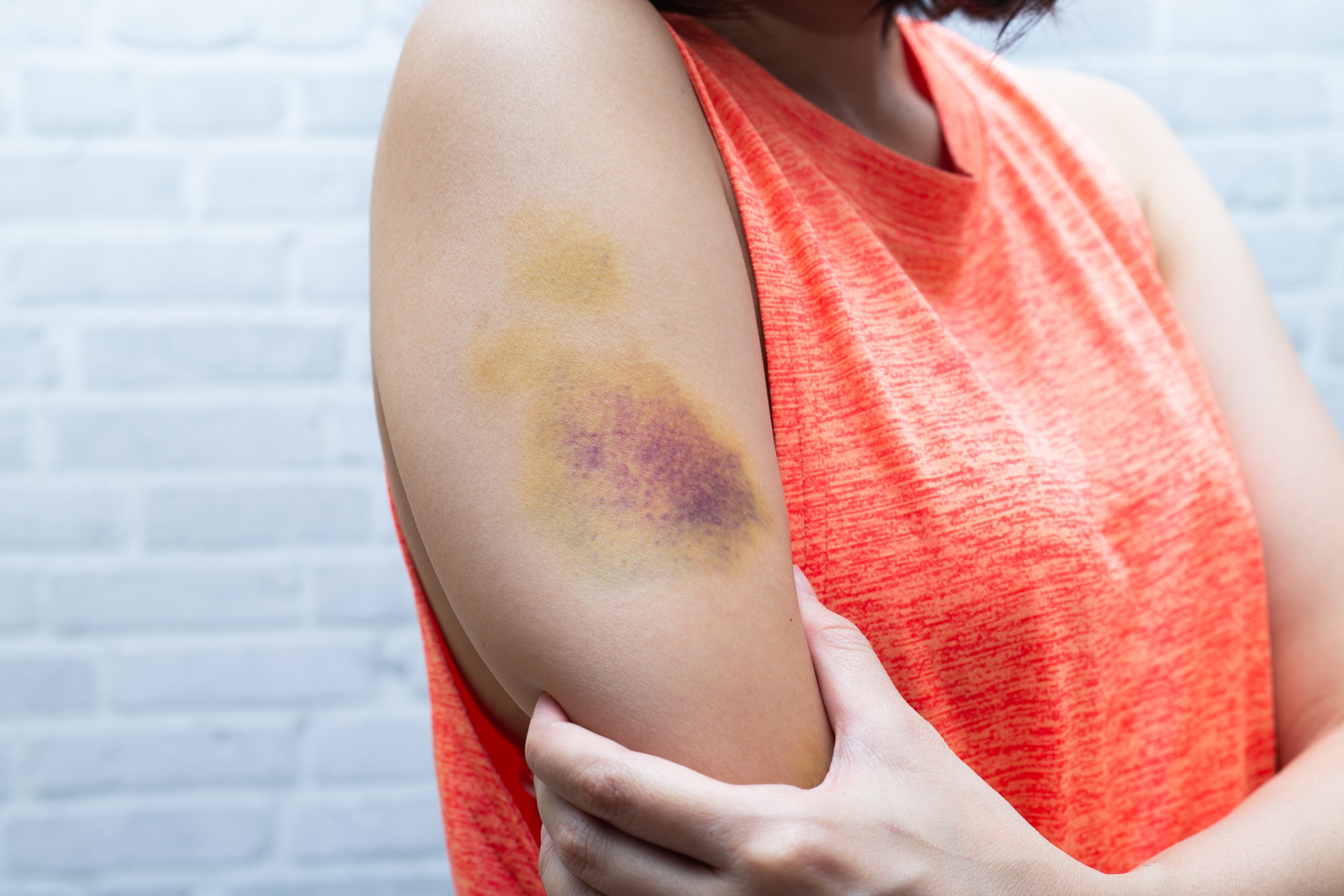
Initial bruises are red or pink. Within a day or two they become blue, purple or black. After about 5 days the pigments change to green and yellow, and then fade to light brown. The exact timing varies and cannot reliably date a bruise, according to forensic research.
Why deep ones are late
A deep bruise forms in muscle or near bone, and blood needs time to track through tissue layers to the surface. A black eye can appear after a blow to the forehead a day earlier because blood gravitates downward.
Easy bruising
- Age: thinner skin and less fat protection after 60.
- Women bruise more easily than men.
- Medications: aspirin, ibuprofen, warfarin, clopidogrel, steroids and some supplements such as fish oil, ginkgo and vitamin E.
- Sun-damaged skin (senile purpura).
- Low platelets, hemophilia and von Willebrand disease.
- Liver disease or low vitamin C or K.
- Leukemia.
First aid
Apply a cold pack wrapped in cloth for 15 to 20 minutes right after injury, elevate the area and rest it. Compression with a bandage can limit swelling.
See a doctor if
You bruise often without remembering injury, bruises are large, painful or appear in unusual places, you bleed from the nose or gums easily, bruises appear after starting a new medicine, or there is a family history of bleeding problems.
Healing
Most bruises heal in 1 to 2 weeks. Your body breaks down the pooled blood using macrophages, which clear the cells and iron.
Fact
The word for a bruise in medicine is ecchymosis. Smaller pinpoint spots are petechiae, and a raised, swollen collection of blood is a hematoma.

Why timing varies
A bruise forms when small blood vessels break under the skin after an impact, and it often becomes visible within minutes to a few hours as blood leaks into surrounding tissue. Deeper bruises, such as those over muscle, may take 24 to 48 hours to show up on the surface. Early color is red, then blue or purple as oxygen is lost. Ice for 10 to 20 minutes right after injury narrows vessels and reduces size. Gravity can make a bruise from a leg injury appear lower down at the ankle days later. Easy bruising occurs with age, vitamin C or K deficiency, liver disease, blood thinners, platelet disorders and leukemia. A child with unexplained bruises on the torso, ears or neck should be evaluated, as it can signal abuse or a blood disorder. Heavy nosebleeds, bleeding gums and large bruises with no known cause are reasons to see a doctor.
Based on data from the Mayo Clinic and the American Academy of Pediatrics