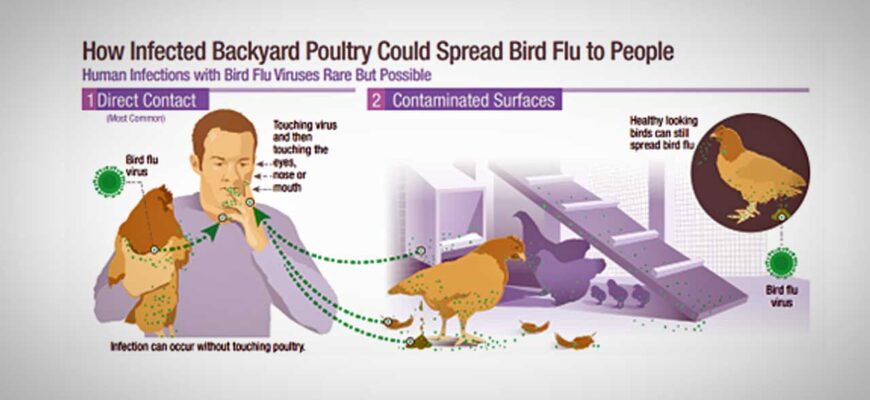
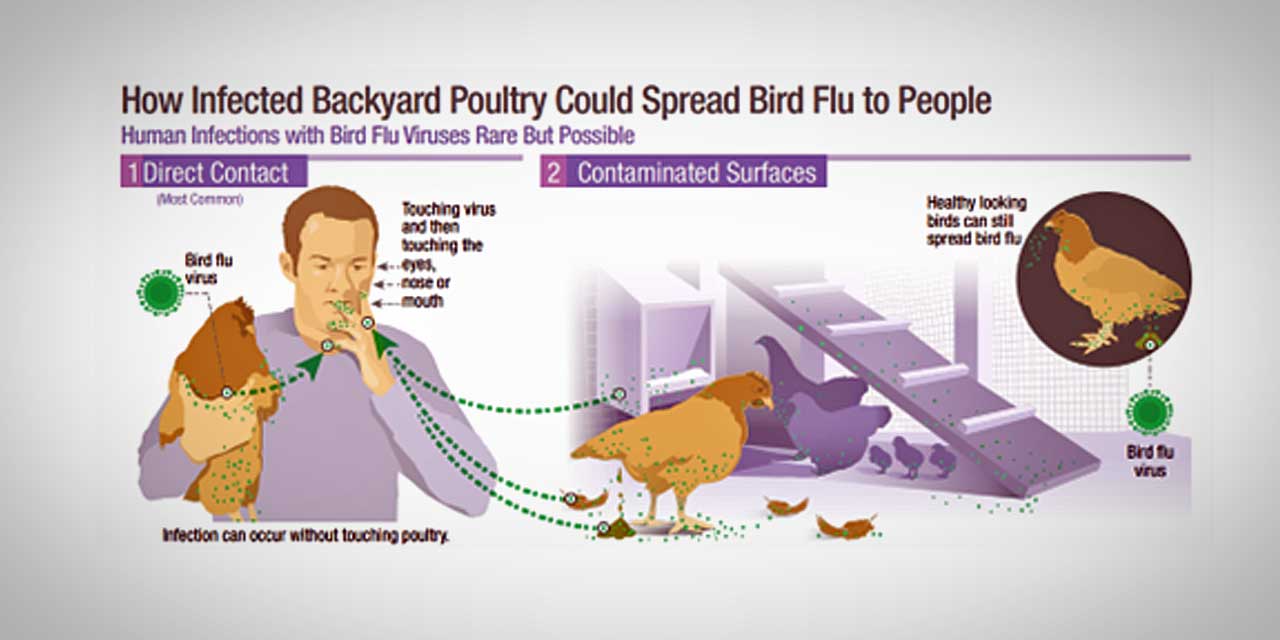
Avian flu spreads through contact with infected birds, their droppings, and contaminated surfaces. Human cases are rare and it does not spread easily between people.
Main route
Avian influenza (bird flu) spreads among birds through saliva, mucus and droppings. Wild waterfowl carry it, and it spreads to poultry through contact and contaminated equipment.
To mammals and humans
Humans are infected by close, unprotected contact with infected birds, their droppings or contaminated surfaces. Human cases are rare. H5N1 has infected over 900 people since 2003, with a case fatality rate around 50 percent in the WHO’s count.
Dairy cattle
In 2024, H5N1 was found in US dairy cows, with dozens of human cases mostly among farm workers.
Human to human
No sustained spread has been reported.
Prevention
Avoid sick or dead birds, cook poultry to 165 F and eggs fully.
Reporting
Contact state agriculture officials.
Main route
Avian influenza (bird flu) spreads mainly among wild waterfowl such as ducks, geese and gulls, which can carry the virus without being sick. Infected birds shed virus in saliva, nasal secretions and feces. It spreads to other birds through contact with infected birds, contaminated water, feed, equipment, clothing and vehicles. Poultry flocks can get infected when wild birds contaminate the area. Highly pathogenic avian influenza (HPAI) H5N1 has killed or led to culling of over 100 million poultry in the US since 2022.
To mammals and humans
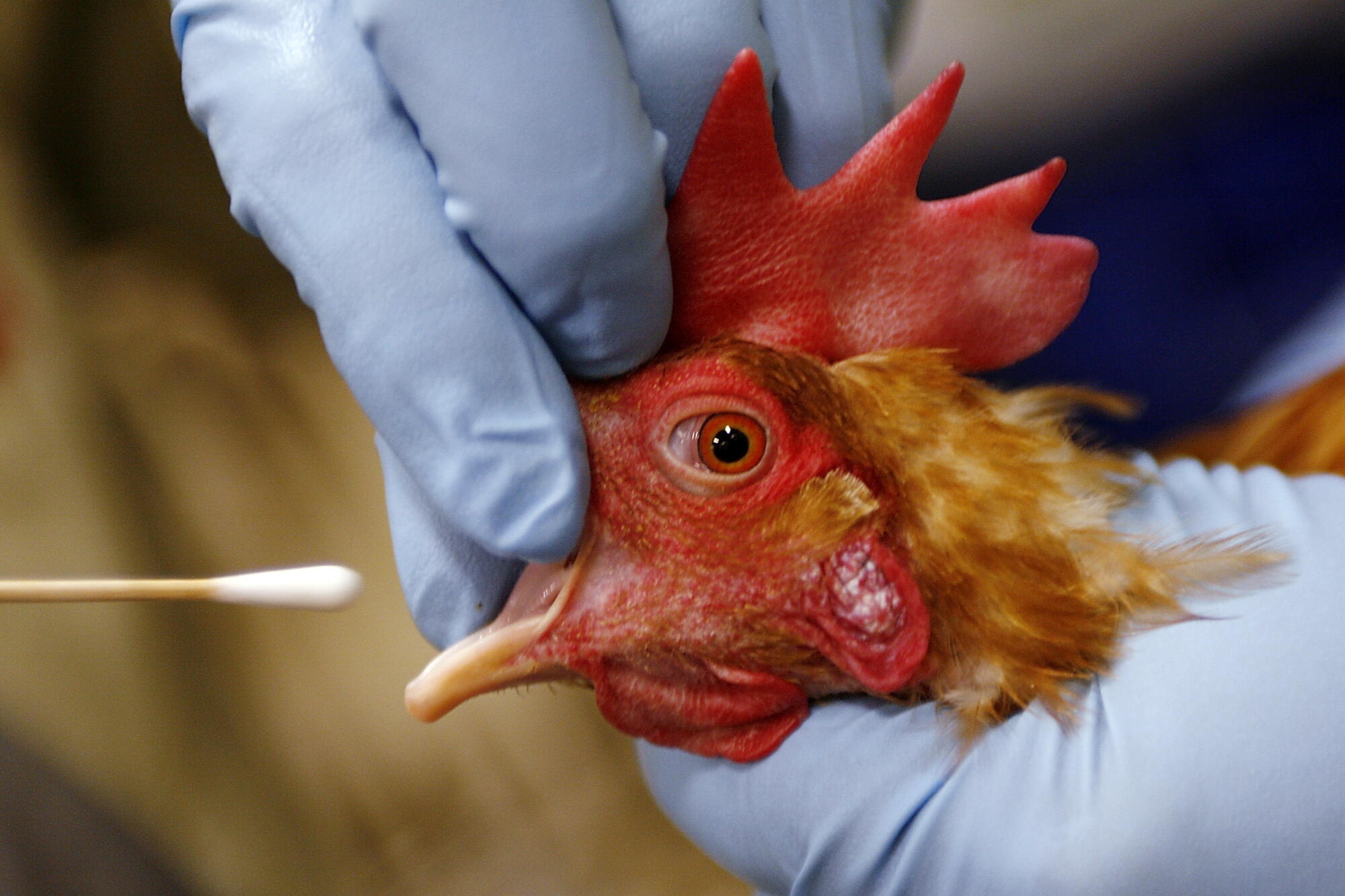
The virus has spread to many mammals, including foxes, skunks, seals, sea lions, mink, cats and others, which got infected by eating infected birds or through contact. Human infections are rare and usually follow close, unprotected contact with infected birds, such as handling sick poultry. The virus attaches poorly to human airway cells.
Dairy cattle
In March 2024, H5N1 was first detected in US dairy cows in Texas. By early 2025, it had spread to over 900 herds in 16 states, according to the USDA. The virus is found in high amounts in raw milk and spreads between cows through milking equipment and movements. Pasteurization inactivates the virus, and the FDA states the commercial milk supply is safe.
Human to human
There is no sustained human-to-human spread of H5N1. A few cases of limited spread among close family contacts occurred in the past in other countries. By early 2025, the CDC had confirmed about 70 human cases in the US since 2024, mostly mild (conjunctivitis) among dairy and poultry workers, and one death in Louisiana in January 2025. The CDC considers the risk to the general public low.
Prevention
- Avoid contact with sick or dead wild birds and poultry.
- Workers should use protective equipment: gloves, goggles, N95 respirators and clothing.
- Do not drink raw (unpasteurized) milk or eat raw dairy.
- Cook poultry and eggs to 165 F.
- Wash hands after touching birds or their droppings.
- Farms should practice biosecurity, such as limiting visitors and cleaning equipment.
- Seasonal flu vaccination for workers reduces the chance of co-infection.
Reporting
Report sick or dead wild birds to your state wildlife agency, and unusual illness in poultry to the USDA at 1-866-536-7593. People with symptoms after bird exposure should call a health department.
Outbreak numbers and species involved
Highly pathogenic avian influenza H5N1 spreads among wild birds, mainly through contact with infected droppings, saliva and respiratory secretions, and migratory waterfowl carry the virus over long distances. Poultry outbreaks in the US since 2022 led to the loss of over 100 million birds, according to the USDA. In March 2024, H5N1 was first detected in US dairy cattle, and by 2025, over 1,000 herds in more than a dozen states were affected. Human cases in the US numbered about 70 by early 2025, mostly farm and dairy workers with mild illness such as conjunctivitis, and one death was reported in Louisiana in January 2025. The CDC states the risk to the general public remains low, and there is no evidence of sustained human to human spread. Avoid contact with sick or dead birds, and do not drink raw milk. Cook poultry to 165 F and eggs until firm.
Based on data from the CDC and the USDA




