The IRS issues most refunds within 21 days of e-filing with direct deposit. Paper returns can take 6 weeks or more.
Standard timing
The IRS says most e-filed refunds with direct deposit are issued in fewer than 21 days. Paper returns can take 4 weeks or more.
Delays
- Errors, missing information or identity checks.
- EITC and Additional Child Tax Credit refunds can’t be issued before mid-February (PATH Act).
- Amended returns take 8 to 12 weeks, sometimes 16.
Check status
Use Where’s My Refund? at irs.gov or the IRS2Go app. The tool updates once a day.
You need
SSN, filing status and exact refund amount.
Speed up
E-file with direct deposit, and double-check your return.

Calling
Call the IRS only if it’s been more than 21 days.
Typical timing
The IRS issues most refunds within 21 days of accepted e-filed returns, with direct deposit. Paper returns can take 6 to 8 weeks or longer. Refunds that claim the Earned Income Tax Credit or the Additional Child Tax Credit cannot be released before mid-February by law, and most arrive by early March. Amended returns (Form 1040-X) can take 16 weeks or more.
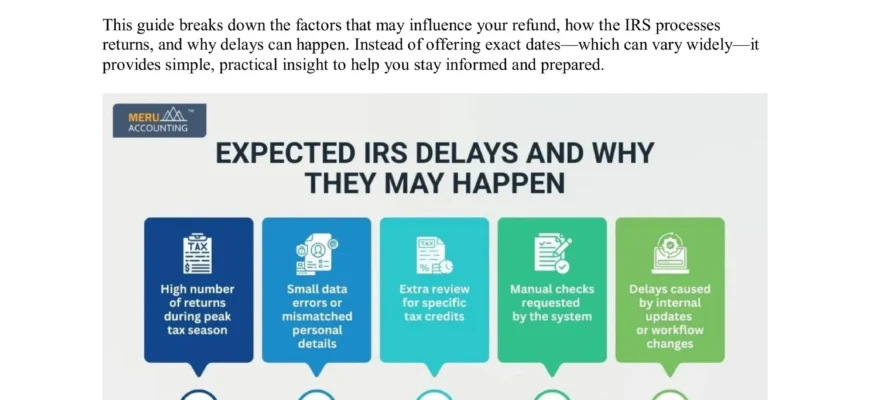
Why a refund may take longer
- Errors or missing information, such as a wrong Social Security number or bank account.
- Identity theft checks or other fraud filters.
- A review of income, credits or deductions.
- Offsets for unpaid child support, federal or state debts, or student loans, which the Treasury Offset Program can collect from refunds.
- Mailing a paper return, especially one that needs manual handling.
How to check status
Use the IRS “Where’s My Refund?” tool or the IRS2Go app. You need your Social Security number or ITIN, filing status and the exact refund amount in whole dollars. Status shows return received, refund approved and refund sent. The tool updates once a day, usually overnight.
How to get a refund faster
- File electronically.
- Choose direct deposit, which is faster and safer than a paper check.
- File early, and double check numbers before sending.
- Use the IRS Free File program if your income is below the limit, which was $84,000 for the 2023 tax year.
When to call
The IRS says to call only if “Where’s My Refund?” tells you to, or if it has been over 21 days since e-filing, or over 6 weeks since mailing. Wait times on the phone can be long, so use the online account first.
State refunds
State refunds are separate and run on each state’s schedule. Many states pay within a couple of weeks of e-filing, while others take 6 weeks or more. Check your state’s tax agency website.
Scams
The IRS does not call, text or email to demand immediate payment or ask for refund details. Beware of fake “refund processing” sites and tax preparers who base fees on a percentage of your refund.

IRS processing details
The IRS issues most refunds in less than 21 days for e-filed returns with direct deposit, according to its statements. Paper returns can take 6 to 8 weeks or longer. The Earned Income Tax Credit and Additional Child Tax Credit refunds cannot be issued before mid-February by law under the PATH Act, and many arrive by the first week of March. Errors, identity checks and amended returns slow refunds, and an amended return (Form 1040-X) can take up to 16 weeks or more. Use the Where’s My Refund tool or the IRS2Go app, which updates once a day. Direct deposit is the fastest way and avoids lost checks.
Based on data from the IRS