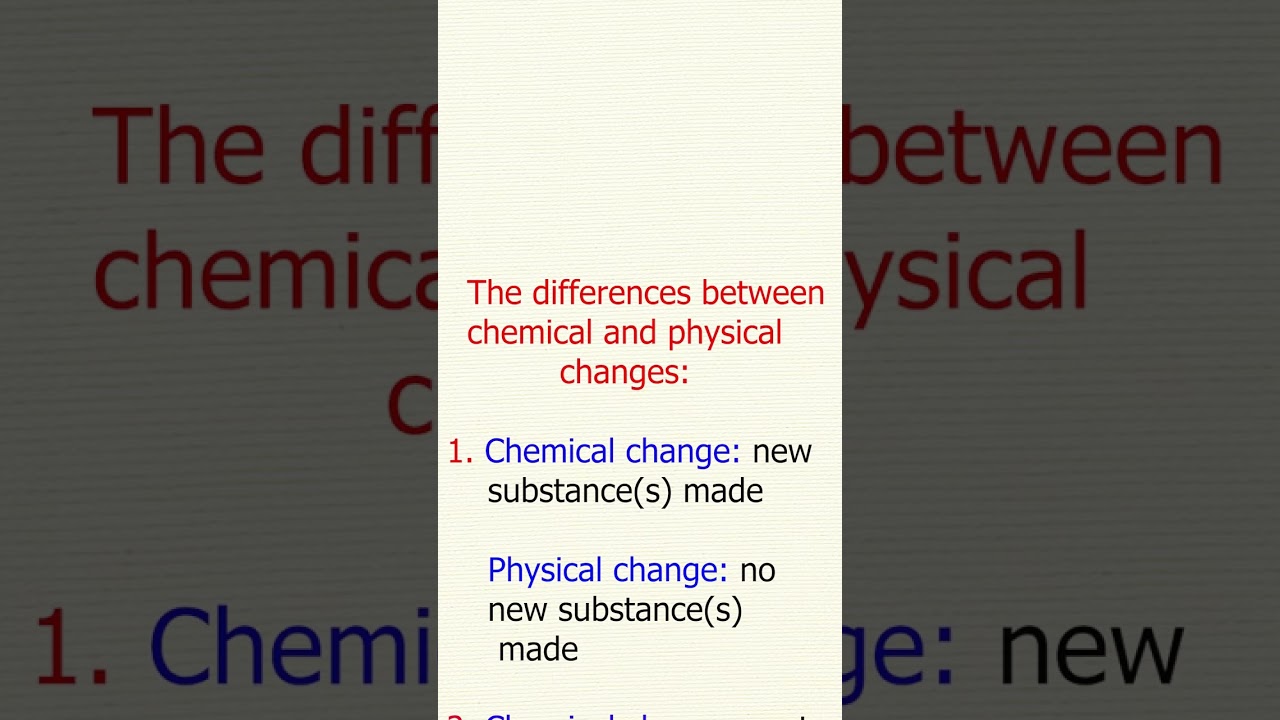
A physical change alters form without making a new substance, like melting ice, while a chemical change creates a new substance, like burning wood.
Physical change
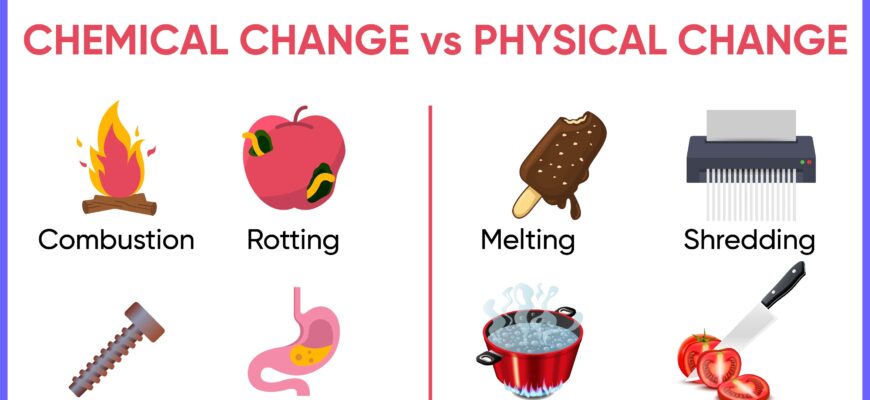
A physical change alters the form or state of matter but not its chemical identity. Examples: melting ice, cutting paper, dissolving sugar, boiling water. It’s often reversible.
Chemical change
A chemical change forms new substances with different properties. Examples: burning wood, rusting iron, baking a cake, digesting food.
Signs of chemical change
- Color change.
- Gas bubbles.
- Precipitate.
- Light or heat released.
- New odor.
Reversibility
Chemical changes are usually hard to reverse.
Key idea
Chemical change breaks and forms bonds between atoms.

Law
Mass is conserved in both.
Physical change in detail
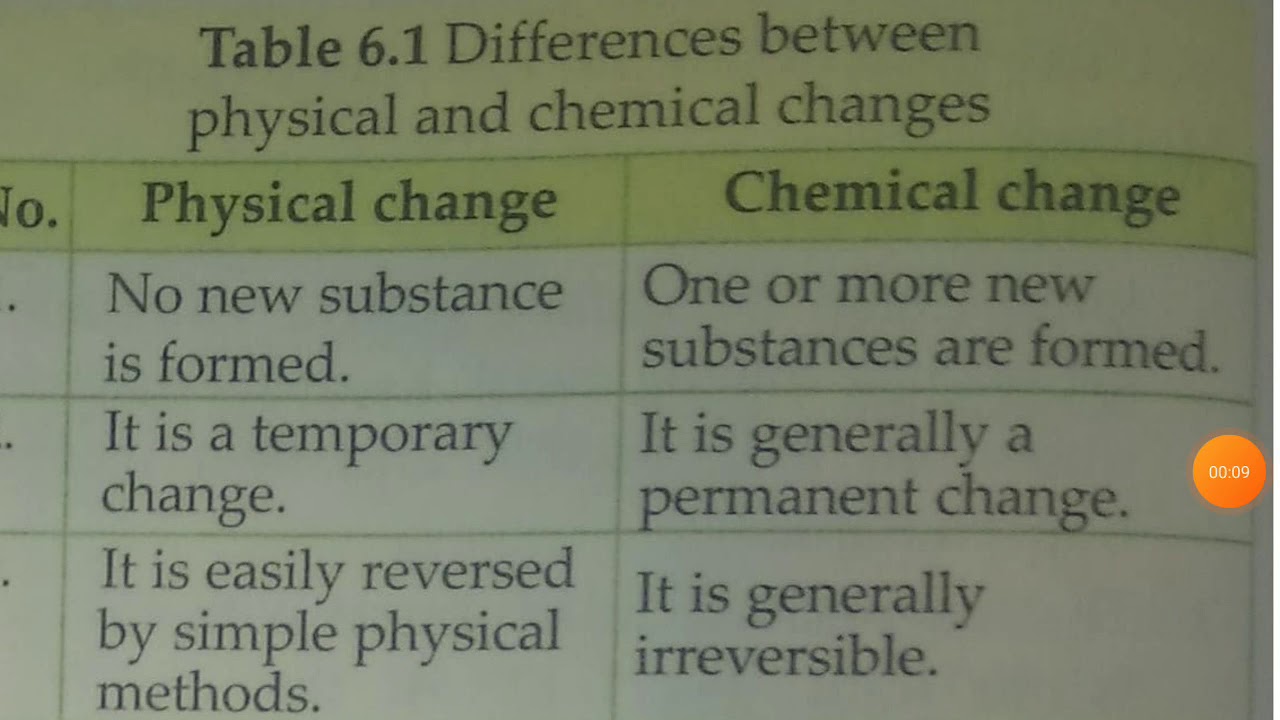
In a physical change, the form or appearance of matter changes but its chemical identity stays the same. No new substance forms. Examples include melting ice, boiling water, cutting paper, dissolving sugar in water, crushing a can, and breaking glass. Changes of state, like melting, freezing, evaporation, condensation and sublimation, are physical changes. Most physical changes are reversible, though not always easily.
Chemical change in detail
In a chemical change, atoms rearrange to form one or more new substances with different properties. Bonds break and form. Examples include burning wood, rusting iron, baking a cake, digesting food, photosynthesis, milk souring, and silver tarnishing. Energy is usually absorbed or released.
Signs of chemical change
- Color change not caused by mixing, like iron turning orange-brown as it rusts.
- Gas production, such as bubbles when baking soda meets vinegar.
- Formation of a solid (precipitate) when two solutions are mixed.
- Temperature change or light, like in a fire.
- A new odor.
These are clues, but not proof. Boiling water produces bubbles and is still a physical change.
Reversibility
Physical changes can usually be reversed by physical means: freezing water returns ice, and evaporating salt water leaves salt. Chemical changes are not easily reversed by physical means, since new substances have formed, though some reactions can be reversed by other reactions.
Key idea
Ask whether the substance is still the same material after the change. If it is, the change is physical. If something new forms, it is chemical.
Law
The law of conservation of mass says that mass is neither created nor destroyed in a chemical reaction, as stated by Antoine Lavoisier in 1789. The mass of reactants equals the mass of products. This is why chemical equations must balance.
Tricky cases
- Dissolving salt in water is generally a physical change, while dissolving an active metal in acid is chemical.
- Cooking an egg is chemical, because heat denatures proteins.
- Mixing is physical unless a reaction occurs, like mixing baking soda and vinegar.
Everyday examples and clues
Physical changes include melting ice, dissolving sugar in water, crushing a can, breaking glass, boiling water and mixing sand with salt. The identity of the substance stays the same, and the molecules are not rearranged into different chemical compounds. Chemical changes include rusting iron, burning wood, baking a cake, digesting food, tarnishing silver and photosynthesis. In a chemical change, bonds break and form to create new substances with different properties. Clues include gas bubbles that are not boiling, a color change, a precipitate, light or heat released, and an odor. Energy changes often accompany chemical reactions, called exothermic if heat is released and endothermic if heat is absorbed. Dissolving salt in water is generally treated as physical because the ions can be recovered by evaporation.
Based on data from the American Chemical Society and chemistry education references