
A charged-off account is a debt the lender has written off as a loss, usually after 120 to 180 days of missed payments. You still owe it and your credit is damaged.
Meaning
A charge-off is when a lender writes off a debt as a loss, typically after 120 to 180 days of missed payments. You still owe the money.
Effects
- Your credit score can drop sharply.
- It stays on your credit report for 7 years from the first missed payment.
- The debt may be sold to a collector.
What to do
- Contact the creditor or collector.
- Negotiate a payoff or settlement.
- Get any agreement in writing.
- Dispute errors.
Tip
Paid charge-offs still show but look better to lenders.
Accounting definition
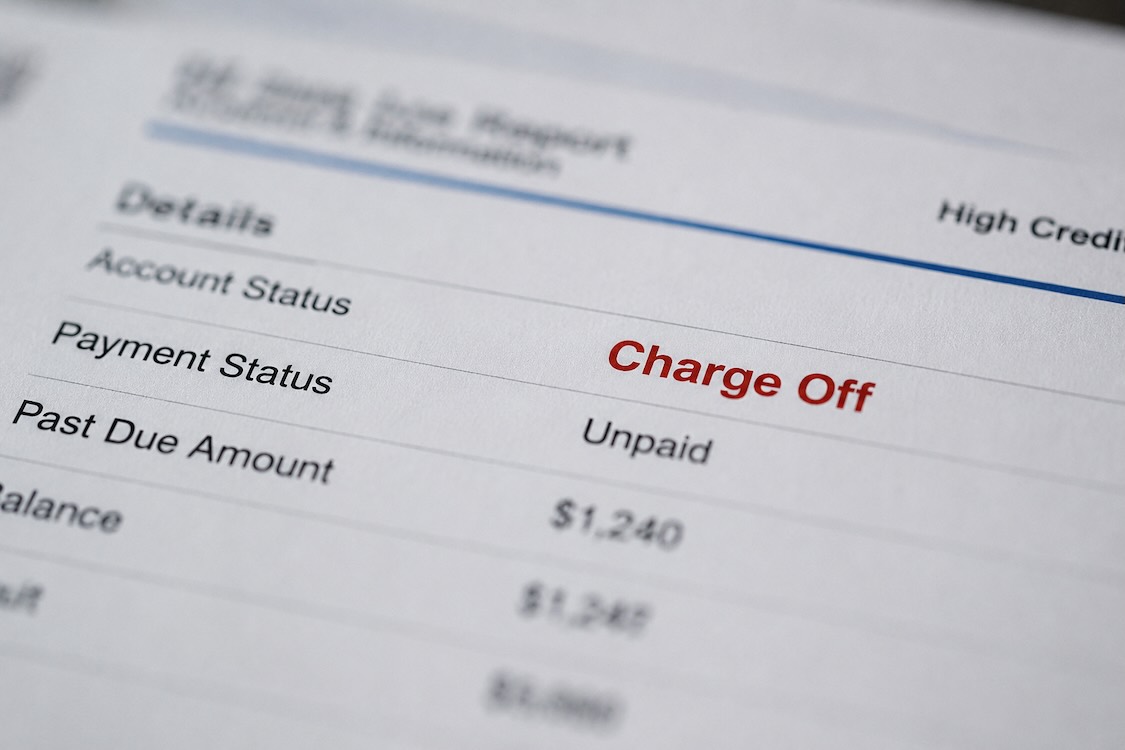
A charge off is when a creditor gives up on collecting a debt and writes it off as a loss. For credit cards, this usually happens after about 180 days (6 months) of missed payments. You still owe the debt.
Credit impact
The charge off is reported to credit bureaus and stays on your credit report for 7 years from the date of first delinquency, according to the Fair Credit Reporting Act. It can lower your credit score significantly, and can make it harder to get loans, credit cards, apartments and some jobs.
Collections
The original creditor may sell the debt to a collection agency, or hire one. The same debt can appear as both a charge off and a collection account on your report. Collectors must follow the Fair Debt Collection Practices Act.
Statute of limitations
Each state sets a time limit for lawsuits over debts, usually between 3 and 10 years. After it passes, the debt is “time barred,” but making a payment or acknowledging the debt can restart the clock in some states.

Options
- Pay in full, which is reported as “paid charge off.”
- Settle for less than the full amount, which is reported as “settled.”
- Negotiate a payment plan.
- Dispute errors with the credit bureaus.
- Request a debt validation letter within 30 days of the first collector contact.
Get it in writing
Always get any agreement in writing before paying.
Tax note
Forgiven debt over 600 dollars can be reported to the IRS on Form 1099-C and may be taxable income.
Free help
Nonprofit credit counseling agencies affiliated with the National Foundation for Credit Counseling offer free or low cost help.
Reporting and collection rules
A charged off account is a debt that a lender has written off as a loss on its books, usually after 120 to 180 days of missed payments. You still owe the money, and the creditor may sell the debt to a collector or keep trying to collect. The charge off appears on your credit report for seven years from the date of the first missed payment that led to it, according to the Fair Credit Reporting Act, and it lowers your credit score. Paying a charged off debt does not remove it, but the status changes to “paid charge off,” which lenders may view more favorably.

Your options
Under the Fair Debt Collection Practices Act, a collector must send a validation notice, and you have 30 days to dispute the debt in writing. The statute of limitations for suing over debt varies by state, usually 3 to 6 years but up to 10 in some, and a partial payment can restart it in some states. Negotiate in writing, such as a settlement, and get the agreement in writing before paying. Forgiven debt of 600 USD or more may be reported on Form 1099-C and may be taxable. Nonprofit credit counseling through members of the National Foundation for Credit Counseling offers free or low cost help.
Based on data from the Consumer Financial Protection Bureau and the FTC




