Bulls cannot see red as a bright color, since they are red-green colorblind. They react to the motion of the cape.
Colorblind
Bulls are dichromats: they see yellow, blue and gray, but lack the cone to distinguish red from green. Red doesn’t appear bright to them.
Why they charge
Bulls react to the motion of the cape, not the color. A white cape provokes the same response. They also charge because they are provoked.
Why red
The cape (muleta) in bullfighting is red, probably to hide blood stains and for tradition.
Evidence
A 2007 MythBusters episode showed that bulls charged moving capes of any color.
Breeding
Fighting bulls are bred for aggression.
Welfare
Bullfighting is controversial and banned in some countries.

Vision
Cattle have wide-angle vision.
Color vision
Bulls, like other cattle, are dichromats. They have two types of color cones, so they have limited red green discrimination. They see blues and yellows better, and red appears as a dark gray or yellowish shade.
What provokes the charge
The movement of the cape, the muleta, triggers the charge, not the color. Studies in which different colored capes were waved, and even a stationary cape, showed that bulls react to motion.
Why the cape is red
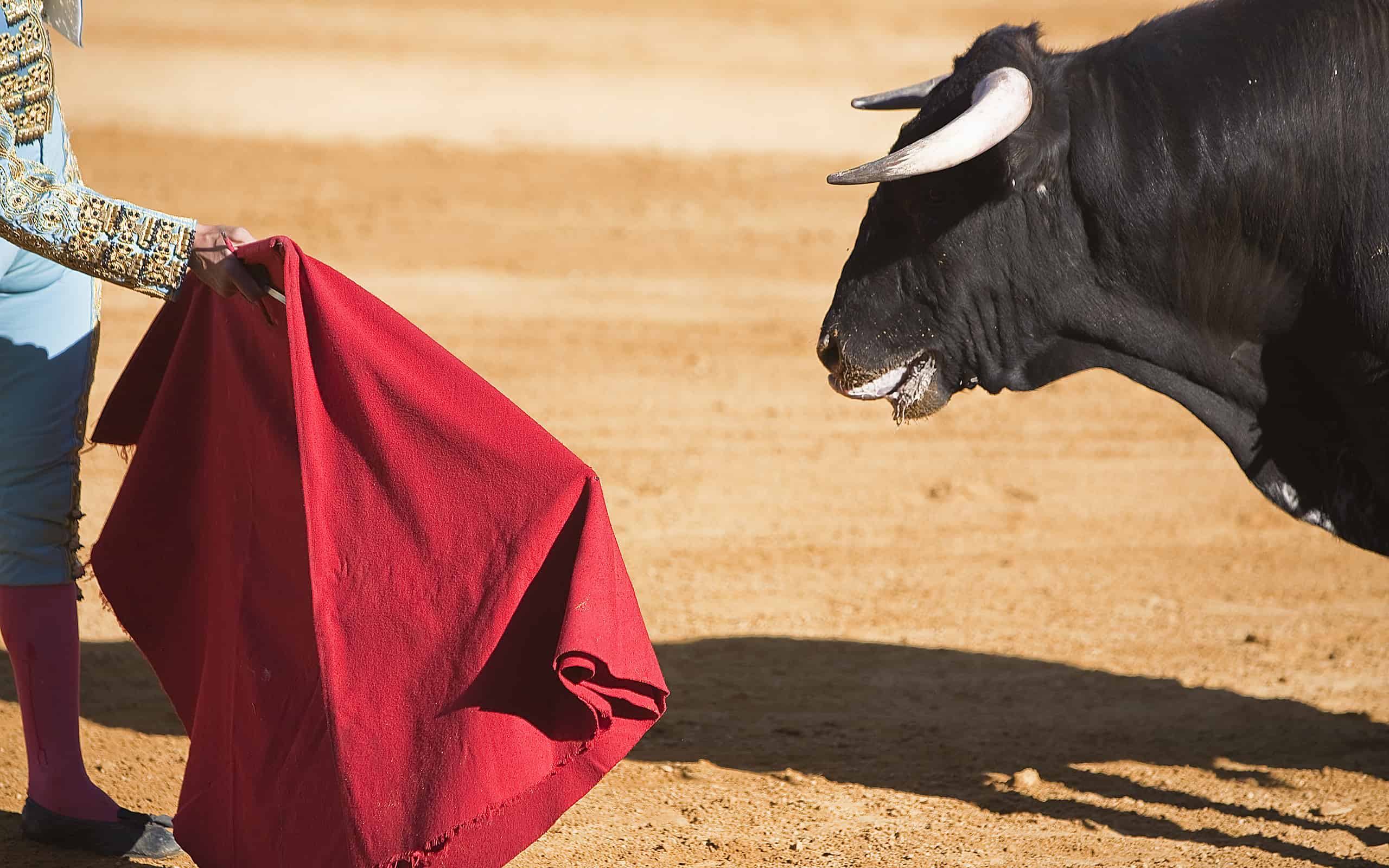
The red color is traditional. It hides bloodstains from the bull and increases the drama for the audience.
Fighting breeds
Spanish fighting bulls (Toro Bravo) are bred for aggression and have been selected for centuries. They are raised for about 4 to 5 years in large pastures, with little human contact, to keep the fighting spirit.
Vision in cattle
Cattle have a wide field of view of nearly 330 degrees due to eyes on the sides of the head, but poor depth perception and less sharp vision than people. They notice movement on the edges.
Handling facts
Cattle are prey animals and tend to react to sudden movement, loud sounds and strange objects.
Welfare debate
Bullfighting is debated worldwide. It is legal in Spain, Portugal, parts of France, Mexico, Colombia, Peru, Ecuador and Venezuela, and has been banned in some regions such as Catalonia (a ban later overturned by Spain’s Constitutional Court in 2016).
Myth testing
The television show MythBusters tested bulls with red, blue and white flags, and the bull attacked all three that were moved.
Cattle vision and the real trigger
Bulls, like other cattle, are dichromats with two types of color receptors, which makes it hard to tell red from green. Red does not enrage them. The movement of the cape triggers the charge, since fighting bulls are bred for aggression and respond to motion. In a 2007 test on the show MythBusters, bulls charged moving cloths of several colors, including red, white and blue, and they were more interested in motion than color. Spanish fighting bulls (toro bravo) are a breed selected for aggression over centuries, and they are not typical farm bulls.

Why the cape is red
The traditional matador’s cape, the muleta, is red, and one common explanation is that the color hides bloodstains and adds drama for the audience. Bulls have wide field vision of about 330 degrees but poor depth perception. The practice of bullfighting is debated: it is banned in many countries, such as Argentina and the UK, and in some regions of Spain such as Catalonia (though that ban was overturned in 2016), and animal welfare groups oppose it. Around farms, the danger is not color but the bull’s size and unpredictability, and dairy bulls cause a share of farm fatalities.
Based on data from university veterinary science departments and the Humane Society