
Skin tags are caused by friction where skin rubs together, and are more common with obesity, diabetes, pregnancy, and genetics.
Cause
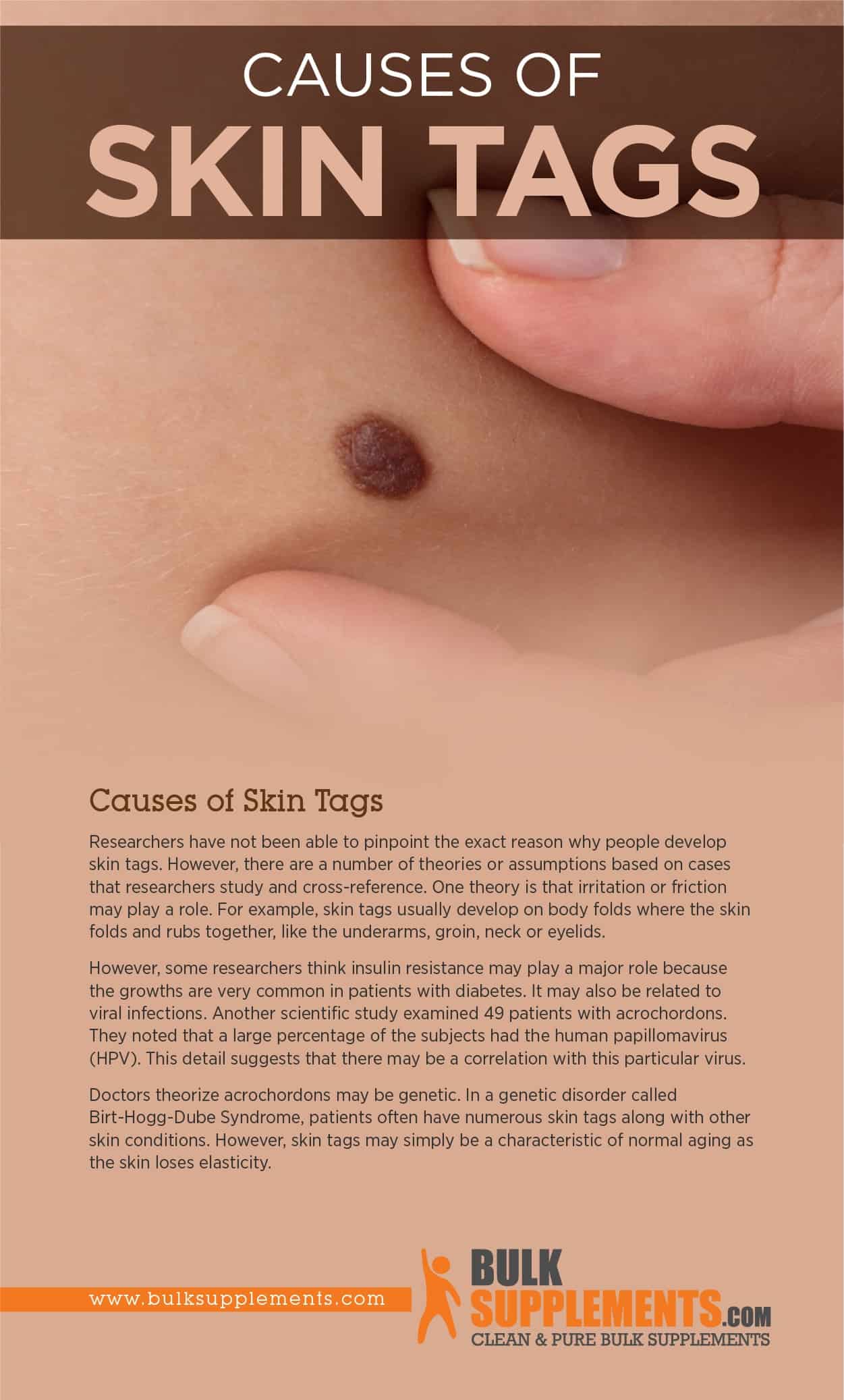
Skin tags (acrochordons) are small, soft, flesh-colored growths in areas of friction such as the neck, armpits, groin and eyelids. They are made of collagen fibers and blood vessels.
Risk factors
- Obesity.
- Type 2 diabetes and insulin resistance.
- Pregnancy.
- Genetics.
- Age over 40.
- Friction from skin rubbing or clothing.
How common
About 46 percent of people have them.
Harmless
They are benign, though they can get irritated.
Removal
A dermatologist can remove them by cutting, freezing or burning. Don’t cut them at home, since it can cause bleeding and infection.
See a doctor
If they bleed, change or grow quickly.
Prevention
Reduce friction and manage weight.
What skin tags are
Skin tags (acrochordons) are small, soft, flesh colored or slightly darker growths on a thin stalk. They usually are 1 to 5 millimeters but can reach a few centimeters.
Typical locations
Neck, armpits, eyelids, groin, under the breasts and other places where skin rubs against skin or clothing.
Prevalence
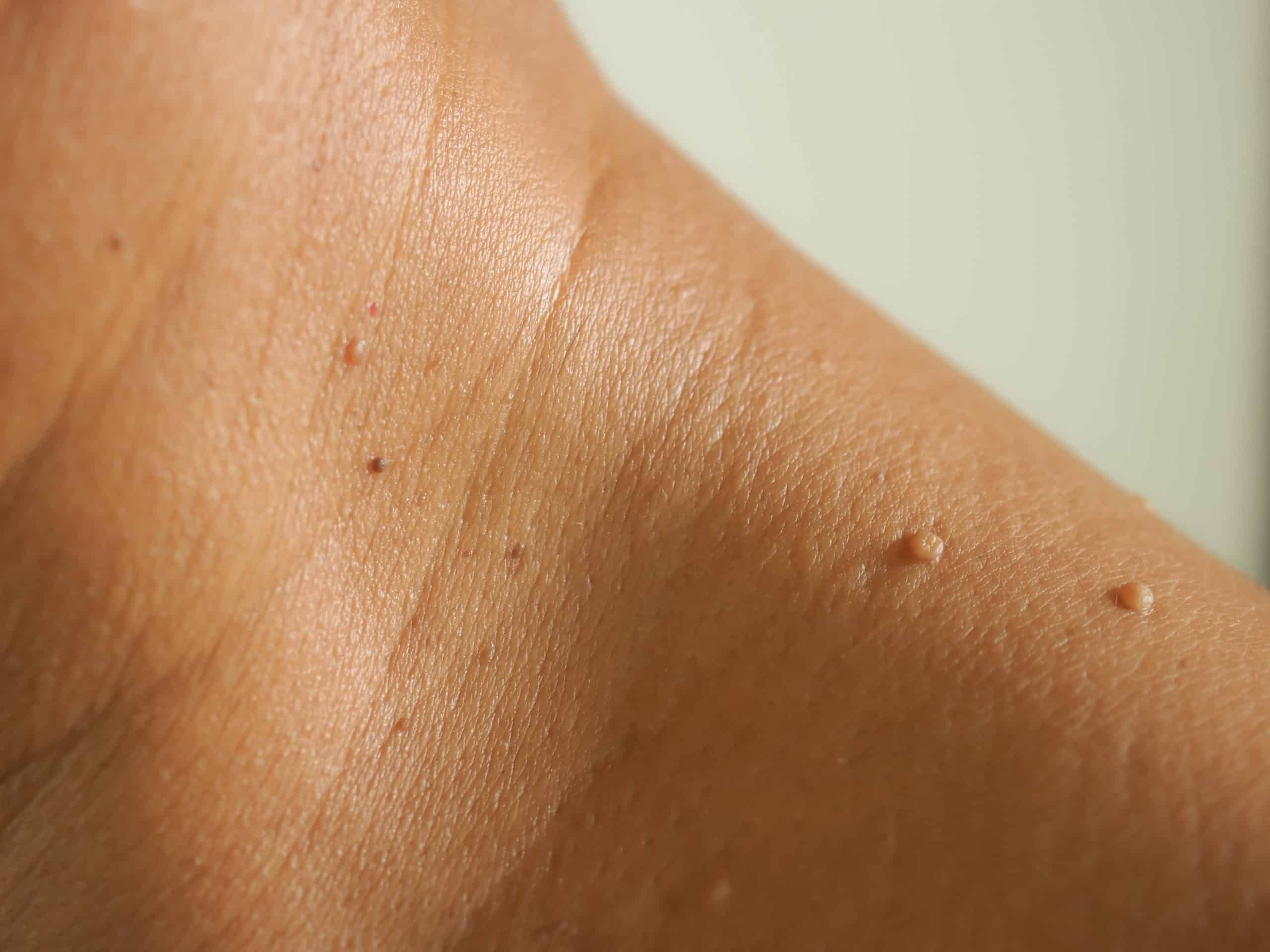
Up to about 46% of people have at least one skin tag, and they become more common after age 40, according to published dermatology studies.
Contributing factors
- Obesity and extra skin folds.
- Type 2 diabetes and insulin resistance.
- Pregnancy, with hormone changes.
- Family history.
- Possibly human papillomavirus (HPV) in some cases.
- Metabolic syndrome.
Are they dangerous
Skin tags are benign and do not turn into cancer. They can become irritated by clothing or jewelry and may bleed if torn.
Removal methods by a doctor
- Cryotherapy with liquid nitrogen.
- Snipping with sterile scissors.
- Electrocautery.
- Ligation, tying off the base.
Removal is often considered cosmetic and may not be covered by insurance. The cost varies from about 100 to 500 dollars.
Home removal risks
Cutting skin tags at home can cause bleeding, infection and scarring. Over the counter freezing kits and tying off products are not recommended for large tags or tags near the eyes.
See a doctor if
A growth changes in color, bleeds on its own, grows quickly or looks irregular, since it might be another skin lesion that needs evaluation.
Prevalence and risk factors
Skin tags (acrochordons) are small, soft, flesh colored growths that hang from a stalk. About 46 percent of adults have at least one, and they become more common after age 40. They form in skin folds where friction occurs, such as the neck, armpits, groin, eyelids and under the breasts. Obesity, type 2 diabetes and insulin resistance, pregnancy and genetics raise the chance, and many skin tags appear in people with metabolic syndrome. They are not contagious or cancerous, but any growth that bleeds, changes color or grows quickly should be seen by a doctor.

Removal choices
Dermatologists can remove skin tags with cryotherapy (freezing with liquid nitrogen), snipping with sterile scissors, cautery or ligation. Removal is considered cosmetic, so insurance often does not cover it, and costs commonly range from about 100 to 500 USD depending on number and location. Home removal with string, cutters or over the counter freezing kits carries risks of bleeding, infection and scarring, and the American Academy of Dermatology advises seeing a professional for removal, especially near the eyes. Losing weight and reducing friction may help prevent new ones.
Based on data from the American Academy of Dermatology and the Cleveland Clinic