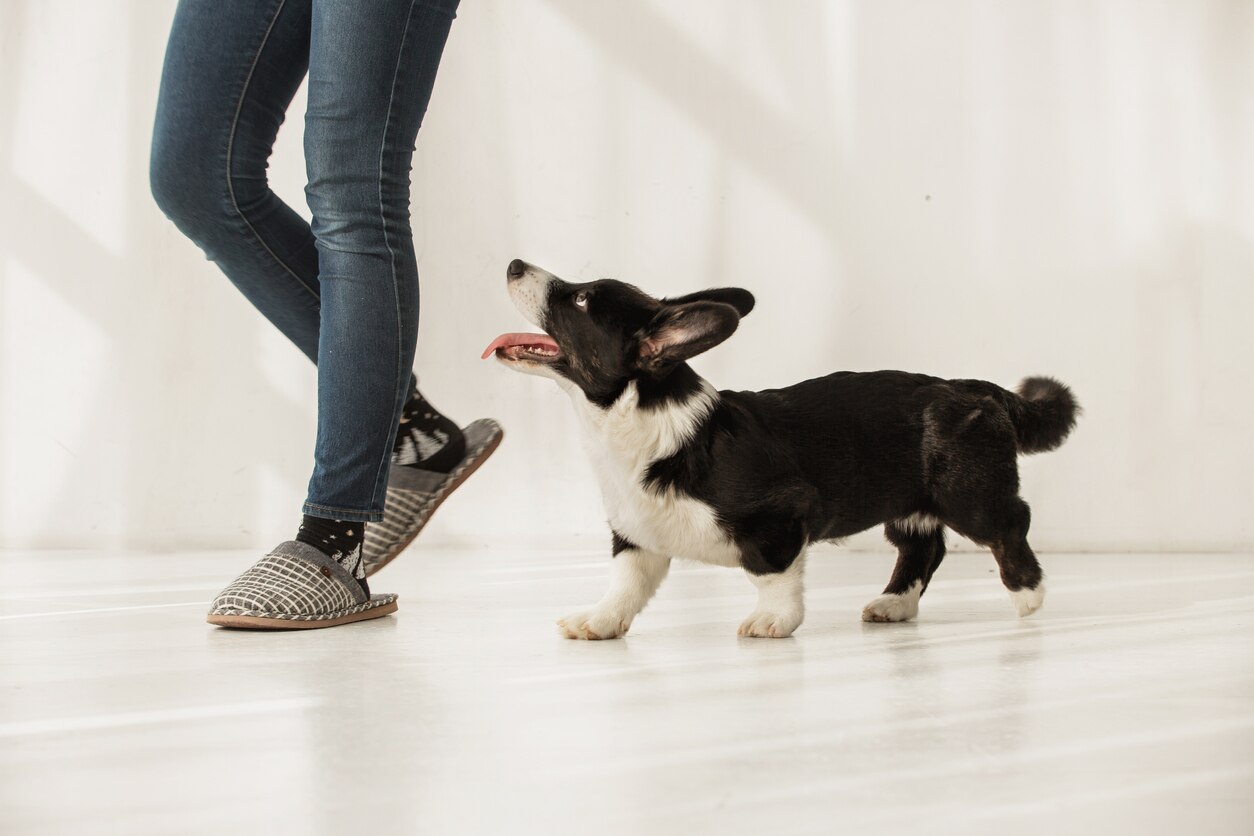
Dogs follow you because of bonding, curiosity, routine, and the hope of food or attention.
Reasons
- Bonding: dogs are social pack animals.
- Routine: following you is part of the day.
- Food and attention.
- Curiosity.
- Fear or separation anxiety.
- Breed: herding and companion breeds (Border Collies, Vizslas) often “velcro” dogs.
Is it a problem
Usually it’s normal. Constant following with distress may signal separation anxiety.
Oxytocin
A 2015 study found gazing between dogs and owners raises oxytocin in both.
What to do
Teach “place” or “stay”, and give rewards for calm alone time.
See a trainer
If it causes anxiety.
Dogs as pack and attachment animals
Dogs were domesticated from wolves at least 15,000 years ago, and they evolved to live closely with humans. Following a person from room to room is a form of social bonding and is common in breeds developed to work with people, such as Labradors, German Shepherds and Border Collies. Some dogs are nicknamed “velcro dogs” because they stay within a few feet of their owner.
Reasons dogs follow you
- Attachment: a 2013 study at the Budapest ethology group found that dogs show an attachment to owners similar to that of infants to caregivers, using the owner as a secure base.
- Reward: if you often give attention, food, or walks, the dog learns that being near you pays off.
- Curiosity and boredom: a dog may follow you because you are the most interesting thing at home.
- Routine: dogs predict that you may go to the kitchen, door or bed, and stay ready.
- Breed instinct: herding and retriever breeds are bred to stay in tune with a handler.
- Age and senses: older dogs with declining sight or hearing may stay close for reassurance.

The oxytocin effect
A 2015 study in Science by researchers in Japan found that when dogs and owners gaze at each other, both have rising oxytocin levels, the bonding hormone also involved between mothers and babies. This loop of gaze and oxytocin may explain some of the closeness.
Is it a problem
Following is usually normal. It becomes a problem when it comes with signs of separation anxiety, such as destruction, barking or howling when alone, pacing, drooling, or toileting indoors. Separation anxiety affects an estimated 14% of dogs seen by behaviorists, according to published surveys. A sudden change in clinginess in an older dog can signal pain, cognitive decline or illness.
What to do
- Provide exercise, at least 30 to 60 minutes a day for most dogs, and mental stimulation such as puzzle feeders and sniff walks.
- Teach a “place” or “stay” cue, and reward calm behavior on a mat.
- Practice short separations, leaving for a few seconds and gradually longer.
- Avoid making big emotional goodbyes and greetings.
- Give independent activities, like chew toys, when you are home.
See a trainer or vet
Talk to a certified trainer or veterinary behaviorist if the dog panics when alone, harms itself, or can’t relax. A vet should check for pain, thyroid issues and cognitive dysfunction when behavior changes suddenly.

Attachment science and breeds
A 2015 study in Science found that oxytocin rises in dogs and owners during mutual gazing. Dogs bred for working closely with people, such as Border Collies, Labradors and German Shepherds, are more likely to follow closely. Velcro dogs may suffer separation anxiety, shown by destructive behavior, barking or house soiling when left alone, affecting an estimated 14 percent of dogs. Training independence includes teaching a “stay” or “place” cue, rewarding calm behavior, and offering puzzle toys. Increase time alone gradually. See a vet or certified behaviorist for severe distress. Puppies and senior dogs with vision or hearing loss may follow more.
Based on data from the American Kennel Club and Science