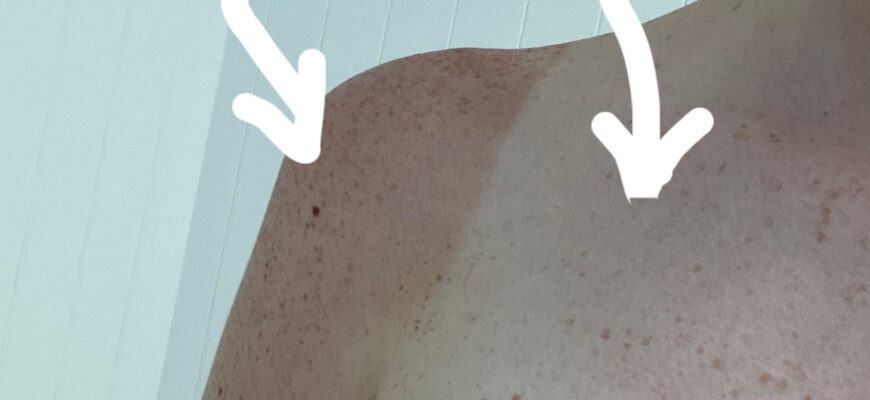
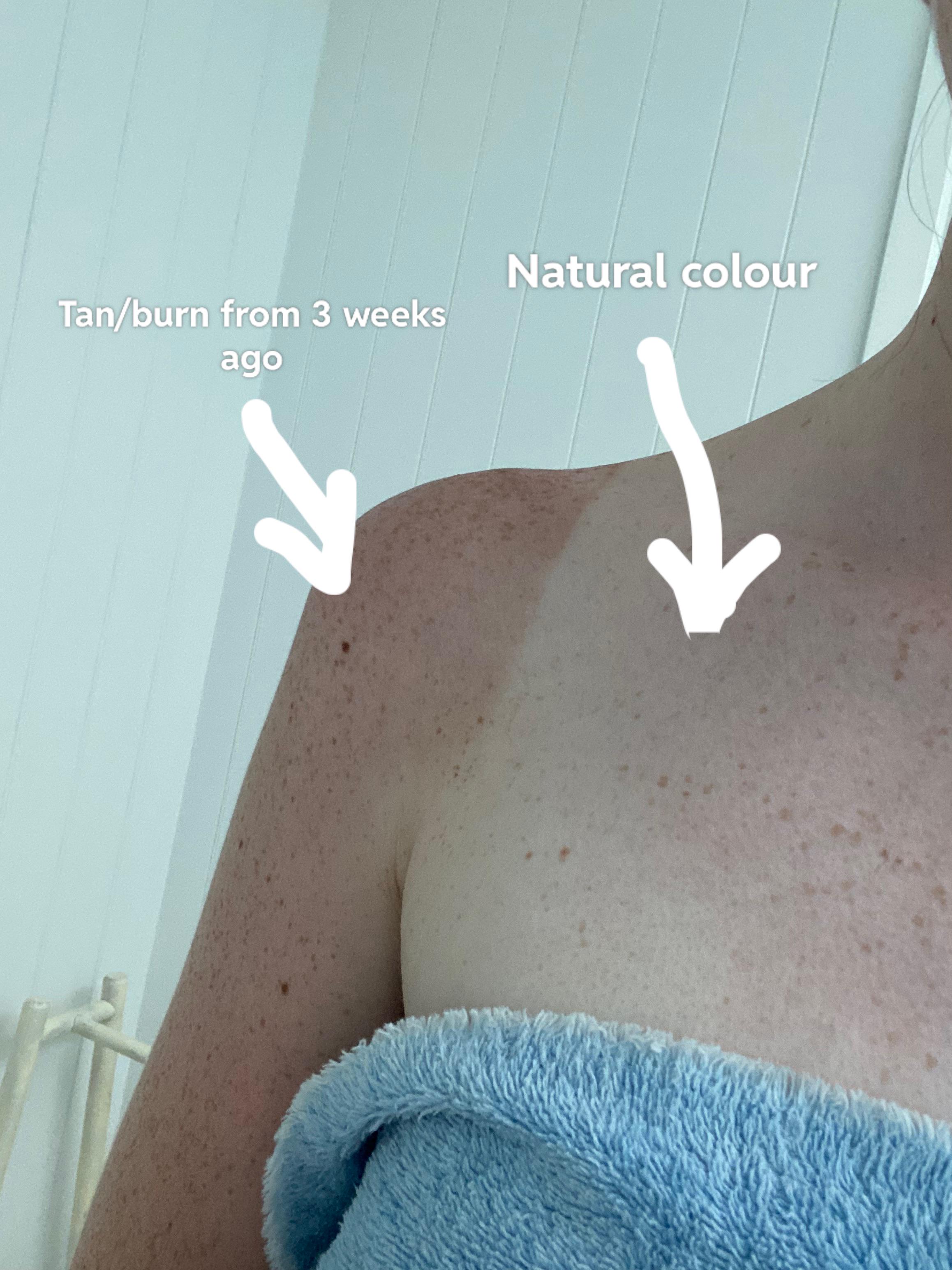
A suntan fades over about 1 to 2 weeks as skin cells shed.
Duration
A suntan fades over 1 to 2 weeks, up to a month, as skin cells shed (the epidermis renews every 28 to 40 days).
What affects it
- Skin type and tan depth.
- Exfoliation and hot showers speed fading.
- Moisturizing helps keep it.
Health note
A tan is a sign of skin damage. The American Academy of Dermatology says there is no safe way to tan. UV exposure raises skin cancer risk.
Safer options
Self-tanner or bronzer. Fake tans last 5 to 10 days.
Sun safety
Use SPF 30 or higher, reapply every 2 hours and wear a hat.
Tanning beds
Classified by the WHO as carcinogenic.
Duration in detail
A tan fades as the top layer of skin cells sheds, which takes about 28 days for the outer skin to renew. Most light tans fade in 7 to 10 days, and a deeper tan can last 2 to 4 weeks. Tans last longer on people who tan well, and fade faster with exfoliation, frequent swimming and hot showers.
What a tan is
A tan is the skin’s response to damage from ultraviolet (UV) light. UV radiation damages DNA in skin cells, and melanocytes make more melanin, the brown pigment, to protect cells. UVB causes sunburn and triggers new melanin, while UVA darkens existing melanin and goes deeper into the skin. A tan gives protection equal to only about SPF 2 to 4.

What affects how long it lasts
- Skin type: people with Fitzpatrick types III to V tan more deeply and hold color longer than type I and II skin, which burns.
- Peeling after a sunburn removes the tan sooner.
- Exfoliation, chlorine and long hot baths speed fading.
- Moisturizing keeps skin hydrated, so dead cells flake off less.
- How often you were exposed. Repeated exposure builds a stronger tan.
Health note
There is no safe tan. The American Academy of Dermatology says any change in skin color from the sun signals skin damage. Cumulative exposure causes premature aging (photoaging), sun spots and skin cancer. Skin cancer is the most common cancer in the US, with about 1 in 5 Americans developing it by age 70. Melanoma kills about 8,000 Americans a year.
Tanning beds
Tanning beds emit mostly UVA at intensities up to 10 to 15 times stronger than midday sun. The World Health Organization classifies them as Group 1 carcinogens. Using a tanning bed before age 35 raises the risk of melanoma by about 59%, according to a review. They do not give a “safe base tan.”
Safer options
- Sunless tanners with dihydroxyacetone (DHA), which stain the outer skin and last 5 to 7 days.
- Bronzers that wash off.
- Self-tanning lotions applied after exfoliating, used with sunscreen as DHA gives no UV protection.
Sun safety
- Use broad spectrum SPF 30 or higher sunscreen, apply a shot glass full (about 30 milliliters, or 1 ounce) for the body, and reapply every 2 hours and after swimming.
- Seek shade between 10 a.m. and 4 p.m.
- Wear a hat, sunglasses with UV protection and clothing with UPF rating.
- Check your skin monthly for new or changing moles, and see a dermatologist yearly.

Skin biology of tanning
A tan is a response to UV damage. UV radiation triggers melanocytes to make melanin, which darkens within hours and the new pigment lasts as long as the skin cells that carry it, which turn over in about 28 days or longer. Fading starts after 1 to 2 weeks as the outer layer sheds. The Skin Cancer Foundation states that a tan is a sign of skin damage, and no safe tan exists. A single indoor tanning session before age 35 raises melanoma risk by 20 percent, and each additional session increases it by 2 percent, based on a 2014 meta-analysis in JAMA Dermatology. Sunless tanners using DHA last about 5 to 7 days.
Based on data from the Skin Cancer Foundation and JAMA Dermatology