A doctor (MD or DO) completes medical school and residency, while a nurse practitioner is an advanced practice nurse with a graduate degree who can diagnose and prescribe, with authority that varies by state.
Doctor (MD or DO)
Four years of medical school and 3 to 7 years of residency, totaling 11 to 15 years of training after high school. Over 10,000 hours of clinical training.
Nurse practitioner (NP)
Registered nurse with a master’s or doctoral degree (DNP), typically 6 to 8 years of education after high school, and 500 to 1,500 clinical hours.
Scope
NPs can diagnose, order tests and prescribe medicines. In about 28 states and DC, they have full practice authority. In others, they work with or under physician supervision.
Numbers
The US has about 385,000 NPs (AANP, 2023).
Cost
NP visits may cost less.

Quality
Studies show similar outcomes for primary care.
Choosing
Doctors suit complex conditions.
Doctor (MD or DO) in detail
Physicians complete four years of undergraduate study, four years of medical school and three to seven years of residency, for 11 to 15 years in total after high school. They are licensed to diagnose, treat and prescribe in all states, and can specialize in areas such as cardiology, surgery or psychiatry. Physician median pay is over $230,000 for primary care and over $350,000 for many specialists, according to Medscape surveys.
Nurse practitioner (NP) in detail
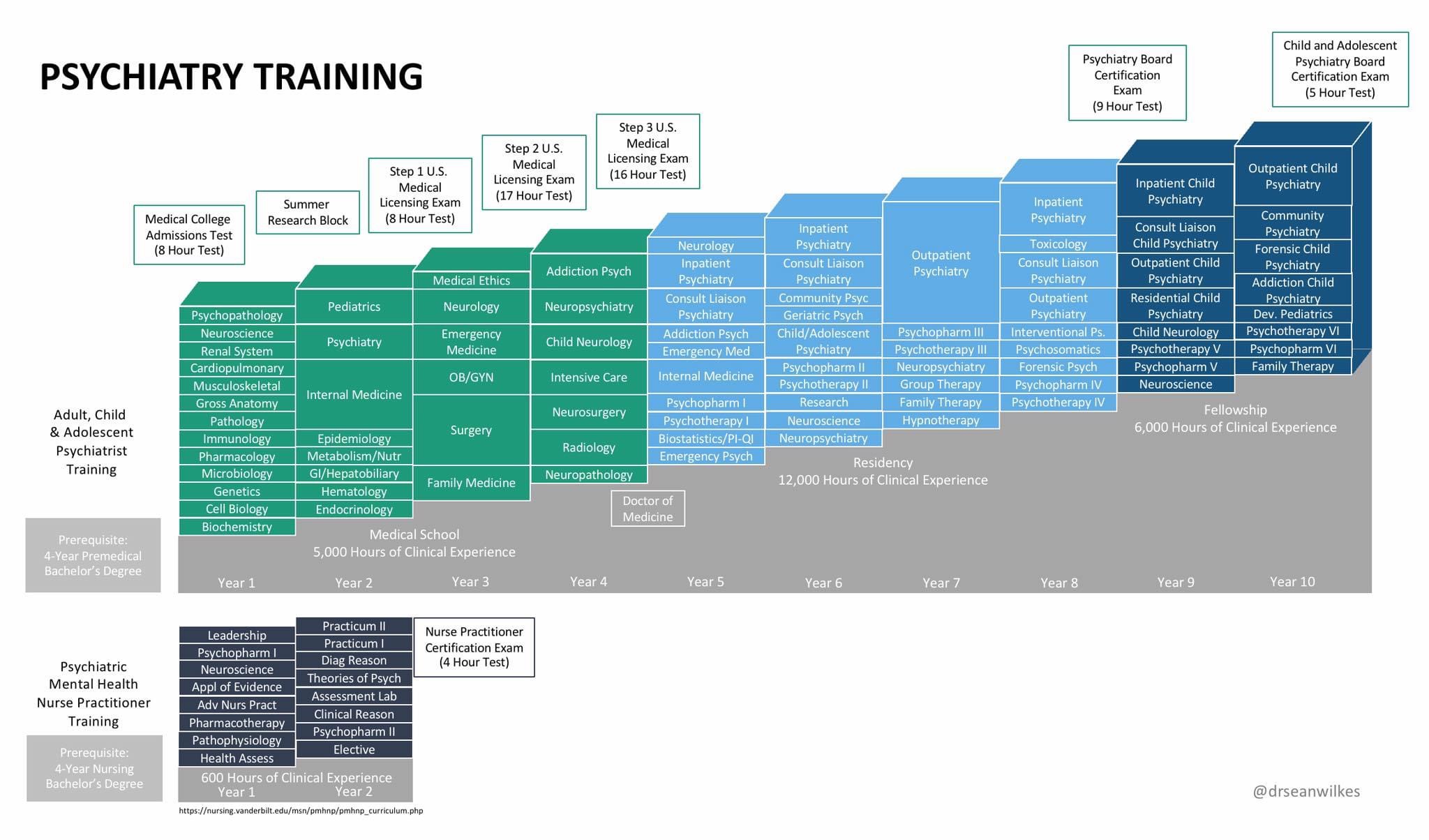
Nurse practitioners are advanced practice registered nurses with a master’s or doctoral degree (MSN or DNP), usually 6 to 8 years of education including a bachelor’s in nursing and often a few years of nursing experience. They complete 500 to 1,500 clinical hours, pass a national certification exam, and are licensed by the state. The BLS reports median NP pay of about $126,000 (2023). NPs are one of the fastest growing jobs, with growth of 45% projected over 10 years.
Scope
NPs can examine patients, diagnose, order tests, prescribe medicine and manage chronic conditions. In 27 states and Washington DC, NPs have full practice authority and can work independently. In other states they need a collaborative or supervising agreement with a physician. Doctors can perform surgery and handle complex or rare conditions, and train longer in medical specialties.
Numbers
There are about 385,000 licensed nurse practitioners in the US, compared with about 1 million licensed physicians. About 70% of NPs work in primary care, such as family practice, pediatrics or women’s health.
Cost
NP visits may cost a bit less, and insurance usually covers both at similar rates. Medicare pays NPs about 85% of the physician fee schedule rate.
Quality
Studies, including a 2018 review of NP care for primary care patients, find comparable outcomes and patient satisfaction for many routine conditions. Physicians are better suited for complicated and rare conditions, and NPs often work in teams with physicians.
Choosing
For routine care, checkups, minor illnesses and managing chronic conditions such as diabetes or high blood pressure, an NP is often a good choice. See a physician or specialist for complex diagnoses, surgery, serious conditions or when referred. Many clinics have both, and you can ask for the clinician you prefer.

Training length and prescribing authority
Physicians (MD or DO) complete four years of medical school and 3 to 7 years of residency, giving a total of 11 to 15 years after high school. Nurse practitioners are advanced practice registered nurses who hold a master’s or doctoral degree, typically requiring 6 to 8 years including a nursing degree and often about 500 to 1,500 clinical hours. About 385,000 nurse practitioners were licensed in the US by 2023, according to the American Association of Nurse Practitioners. In 27 states plus Washington DC, NPs have full practice authority to evaluate patients, diagnose and prescribe without physician oversight, while other states require collaboration or supervision. Studies found that outcomes and patient satisfaction in primary care are comparable. Median annual pay is about 126,000 USD for NPs and over 230,000 USD for many physician specialties, per Bureau of Labor Statistics data. Appointment length and availability often differ, and NPs may offer shorter wait times in some areas.
Based on data from the AANP and the Bureau of Labor Statistics