The heart pumps blood: the right side sends blood to the lungs for oxygen, and the left side sends it to the rest of the body, controlled by four valves.
Structure
The heart has four chambers: two atria and two ventricles. Four valves keep blood flowing one way.
Blood flow
- Right side sends oxygen poor blood to the lungs.
- Left side pumps oxygen rich blood to the body.
Rhythm
The sinoatrial (SA) node sets the pace. The heart beats about 60 to 100 times a minute at rest, around 100,000 times a day.
Output
It pumps about 5 liters of blood per minute at rest.
Four chambers
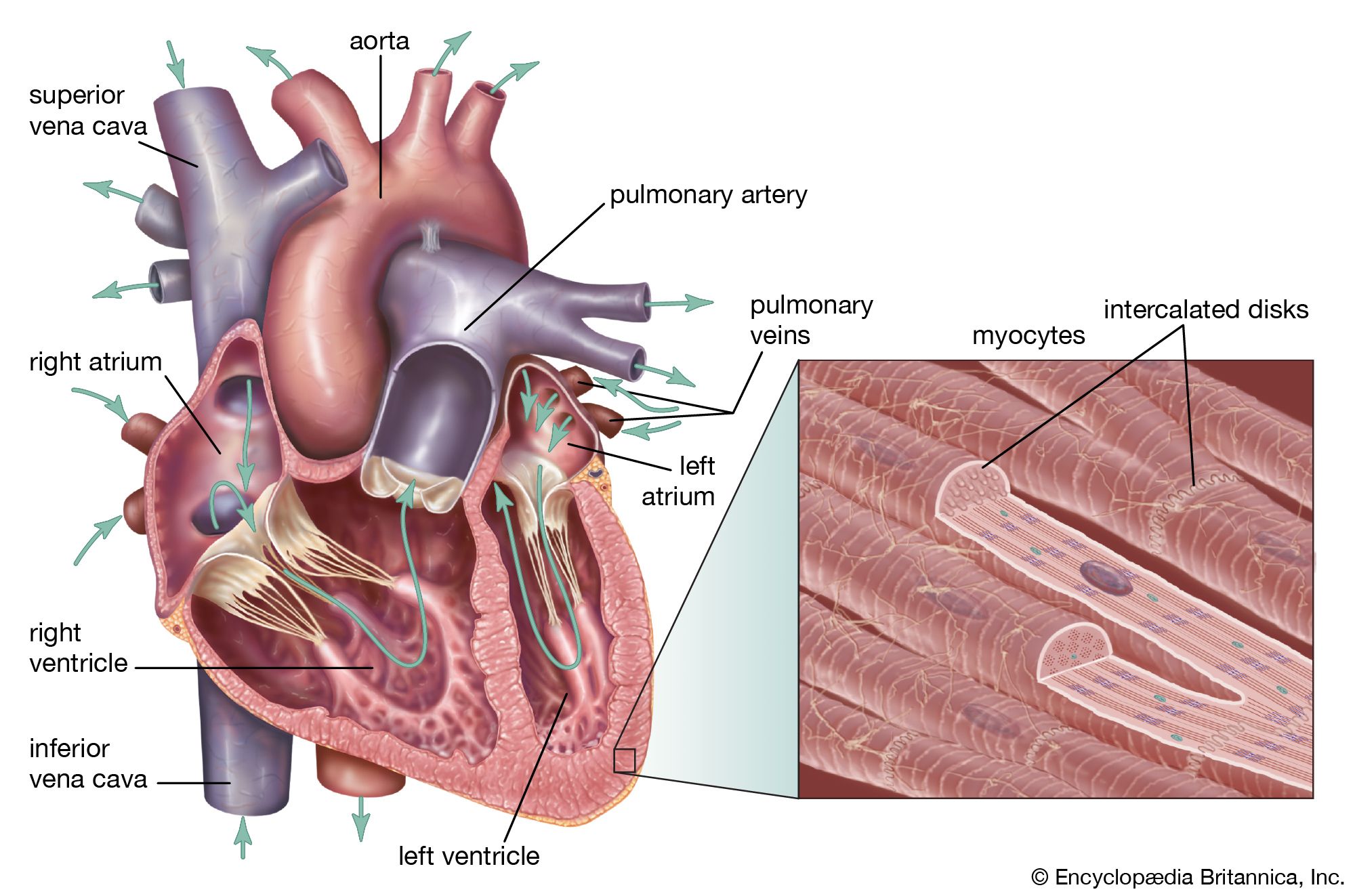
The heart has four chambers: right atrium, right ventricle, left atrium and left ventricle. The atria receive blood, and the ventricles pump it out. The left ventricle has the thickest wall because it pumps blood to the entire body.
Valves
Four valves keep blood moving one way: tricuspid, pulmonary, mitral and aortic. The sounds of “lub dub” come from valves closing.
Circulation
- Right side: sends oxygen poor blood to the lungs through the pulmonary artery.
- Left side: receives oxygen rich blood from the lungs and pumps it through the aorta to the body.
Electrical system
The sinoatrial (SA) node in the right atrium is the natural pacemaker. Signals pass through the atrioventricular node and the bundle of His, triggering ventricles to contract in sequence.

Rates and size
A resting adult heart beats 60 to 100 times per minute. A fist sized heart weighs about 250 to 350 grams, pumps about 5 liters of blood per minute at rest and beats about 100,000 times per day, or around 2.5 billion times in a lifetime of 70 years.
Coronary arteries
The heart muscle gets its own blood supply from coronary arteries. A blockage can cause a heart attack.
Blood pressure
Normal blood pressure is below 120/80 mm Hg. The top number (systolic) is the pressure when the heart beats, and the bottom (diastolic) is between beats.
Keeping it healthy
Regular exercise, a diet with vegetables, fruit and whole grains, not smoking, managing blood pressure and cholesterol, sleep and stress reduction. Heart disease is the leading cause of death in the United States, according to the CDC.
Structure and numbers
The human heart has four chambers: the right atrium and ventricle receive oxygen poor blood and send it to the lungs, and the left atrium and ventricle pump oxygen rich blood to the body. Four valves keep blood flowing one way. A healthy heart is about the size of a fist, weighs 8 to 12 ounces, beats about 60 to 100 times per minute at rest, roughly 100,000 times a day, and pumps about 5 liters of blood per minute, which is roughly 2,000 gallons a day. The sinoatrial node in the right atrium sets the rhythm with electrical signals. Coronary arteries supply the heart muscle itself.

Heart health facts
Heart disease is the leading cause of death in the US, causing about 1 in 5 deaths, around 700,000 a year, according to the CDC. Normal blood pressure is below 120/80 mmHg. Risk factors include high blood pressure, high LDL cholesterol, smoking, diabetes, obesity and inactivity. The American Heart Association recommends 150 minutes of moderate activity weekly, a diet rich in vegetables, fruits, whole grains and fish, not smoking and regular checks of blood pressure and cholesterol. Call 911 for chest pain or pressure, shortness of breath or fainting.
Based on data from the CDC and the American Heart Association