
Rheumatoid arthritis (RA) is an autoimmune disease that attacks the joints, while osteoarthritis (OA) is wear-and-tear damage to joint cartilage.
Osteoarthritis (OA)
Wear-and-tear arthritis caused by breakdown of cartilage. It affects about 32.5 million US adults (CDC). It usually starts after age 50 and affects weight-bearing joints (knees, hips) and hands. Pain worsens with activity, and morning stiffness lasts under 30 minutes.
Rheumatoid arthritis (RA)
Autoimmune disease where the immune system attacks the joint lining. It affects about 1.3 million Americans. It can start at any age, often 30 to 60, affects joints symmetrically (both hands), and morning stiffness lasts over 30 minutes. It can cause fatigue and fever.
Treatment
OA: exercise, weight loss, pain relievers, injections, joint replacement. RA: DMARDs and biologics.
Diagnosis
X-rays for OA. Blood tests (RF, anti-CCP) for RA.
See a doctor
For joint pain and swelling.
Underlying cause

OA is wear and tear of cartilage, and the joint changes include bone spurs. RA is an autoimmune disease where the immune system attacks the lining of the joints, called the synovium.
Typical age
OA usually starts after age 50, though injuries can cause it earlier. RA often starts between ages 30 and 60 and is about 2 to 3 times more common in women.
Joint pattern
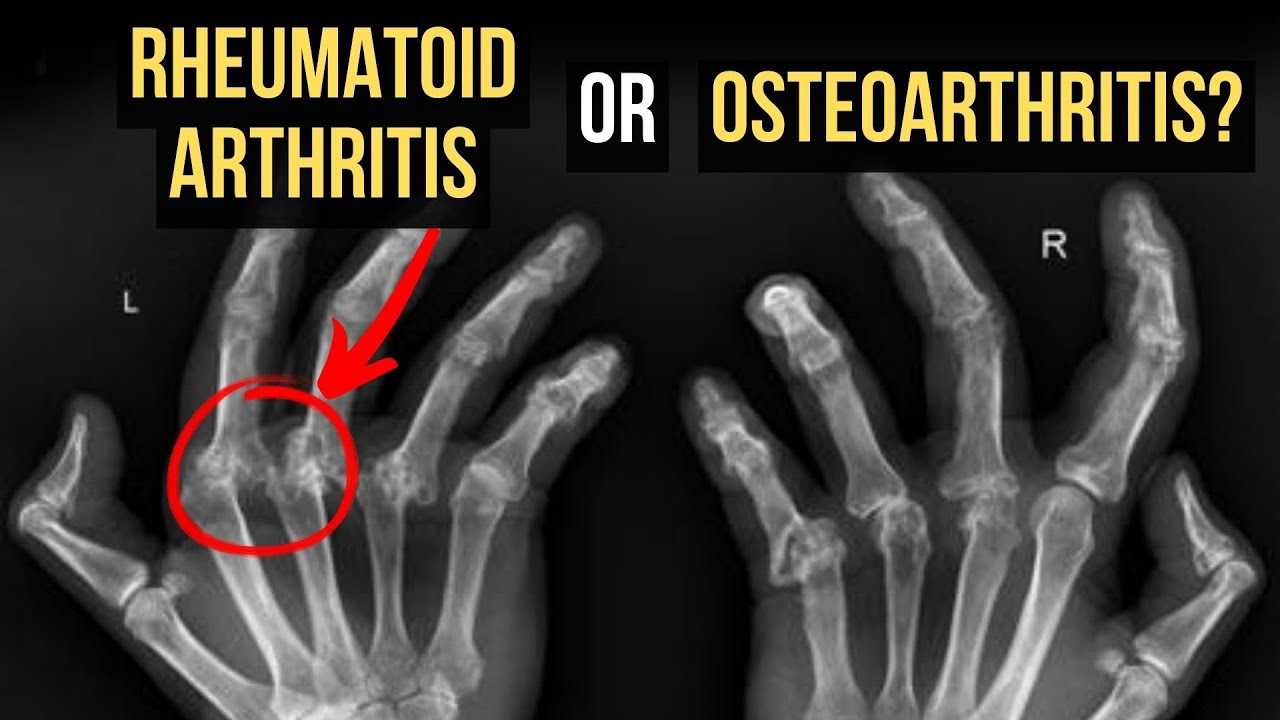
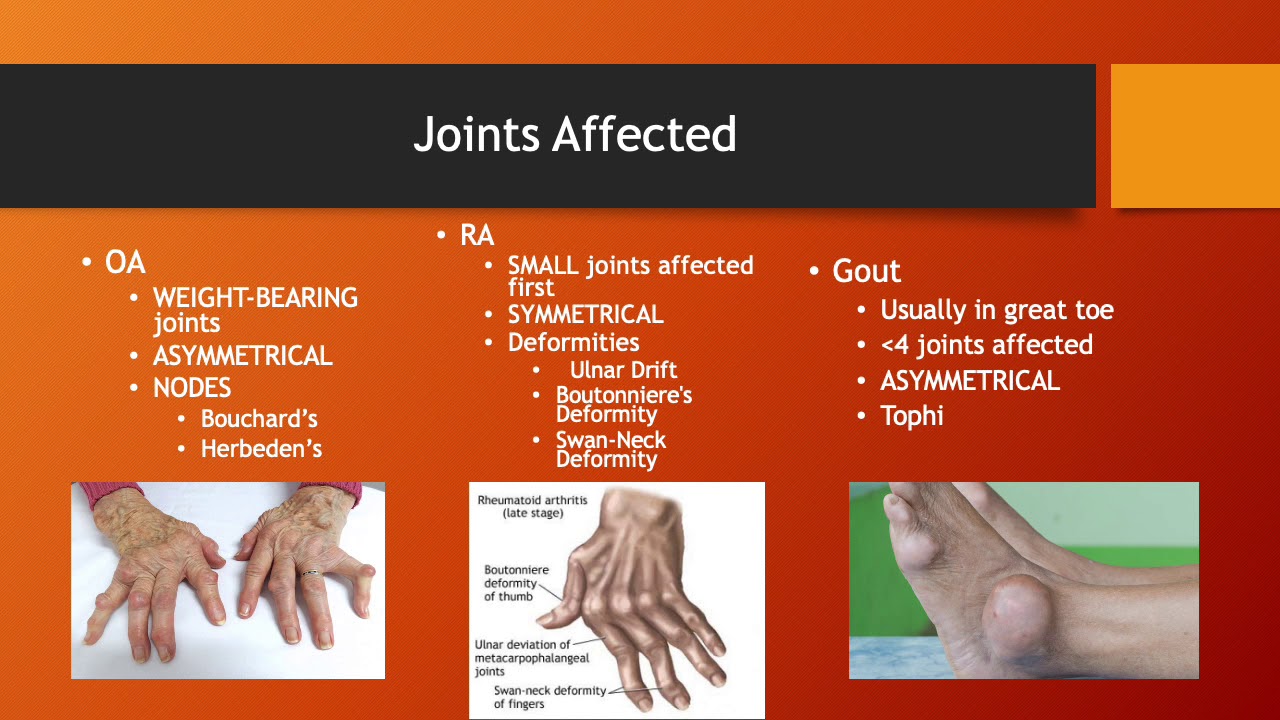
- OA: affects weight bearing joints like the knees and hips, the hands at the base of the thumb and the ends of the fingers.
- RA: usually affects joints symmetrically, such as both wrists, and the small joints of the hands and feet.
Morning stiffness
OA stiffness lasts less than 30 minutes. RA stiffness lasts more than an hour.
Other symptoms
RA can cause fatigue, low fever, weight loss, rheumatoid nodules and effects on the eyes, lungs and heart. OA remains mostly in the joints.
Tests
- OA: X-ray shows narrowed joint space and bone spurs.
- RA: blood tests for rheumatoid factor, anti-CCP antibodies, ESR and CRP, plus imaging.
Numbers
The CDC estimates about 32.5 million US adults have OA, and around 1.3 million have RA.
Treatment goals
RA needs early treatment with DMARDs and biologics to prevent joint damage. OA is managed with exercise, weight management, physical therapy, pain medicines, injections and joint replacement.
Lifestyle
Low impact exercise like swimming, cycling and walking helps both conditions.
Disease mechanisms and demographics
Osteoarthritis (OA) is a degenerative joint disease in which cartilage wears down, and it affects more than 32 million US adults, according to the CDC. It is most common after age 50 and in weight bearing joints such as knees, hips and hands. Rheumatoid arthritis (RA) is an autoimmune disease in which the immune system attacks the joint lining, and it affects about 1.3 million Americans, mostly women, with onset often between 30 and 60. RA is usually symmetrical, such as both wrists or both hands, and can cause fatigue, low fever and affect the lungs, eyes and heart. Morning stiffness in RA often lasts longer than 30 to 60 minutes, while in OA it generally eases in under 30 minutes.
Diagnosis and treatment
OA is diagnosed from symptoms and X-rays, which show narrowed joint space and bone spurs. RA is diagnosed with blood tests, including rheumatoid factor, anti-CCP antibodies, ESR and CRP, plus imaging. Treatment for OA includes weight loss, exercise, NSAIDs, injections and joint replacement. RA treatment starts early with disease modifying drugs such as methotrexate, and biologics such as TNF inhibitors, with the goal of remission and preventing joint damage. Low impact exercise like swimming helps both conditions. See a rheumatologist for persistent joint swelling, morning stiffness or fatigue.
Based on data from the CDC and the American College of Rheumatology




