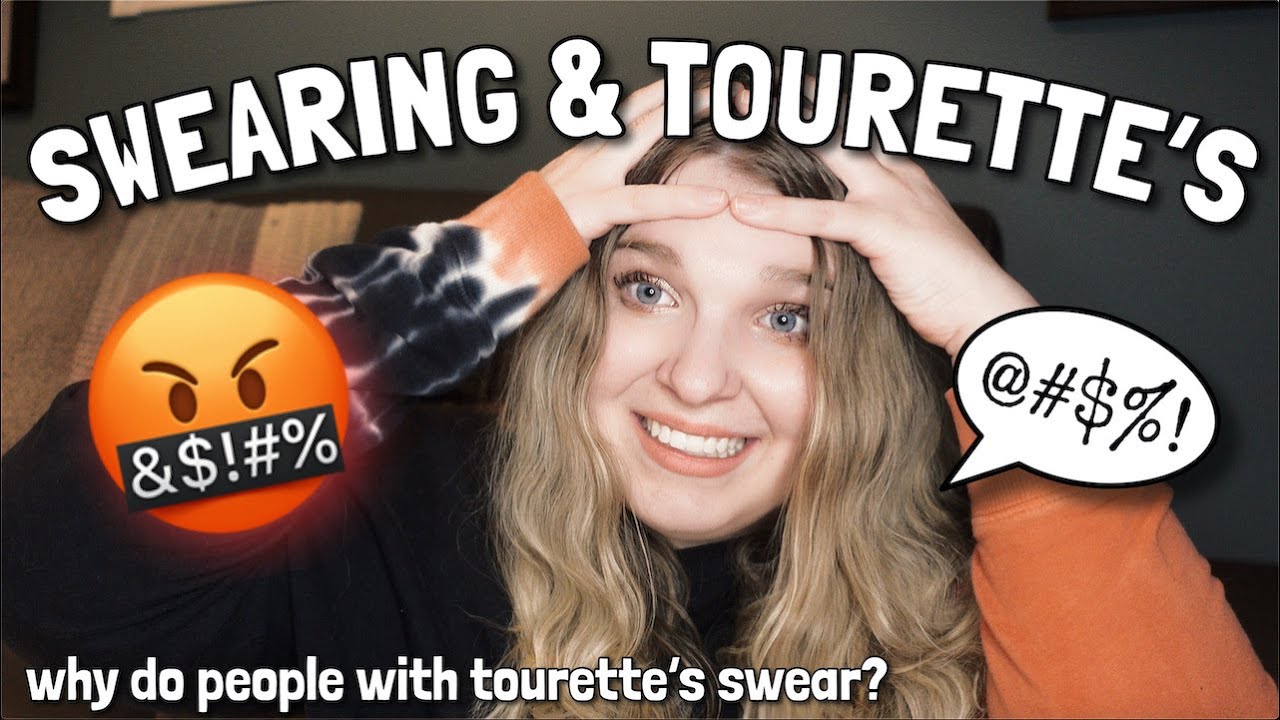
Only a minority of people with Tourette’s (about 10 percent) have coprolalia, the involuntary swearing, and it is not intentional.
Coprolalia
Involuntary swearing or inappropriate speech (coprolalia) affects about 10 to 20 percent of people with Tourette syndrome (CDC estimates are around 10 percent). Most people with Tourette’s never curse.
Why
It’s a type of complex vocal tic. It’s not a choice, and not due to anger. The tic can involve the brain’s basal ganglia and limbic system.
Media
Movies and TV stereotypes exaggerate it.
Not the same as
Voluntary swearing.
Support
Tourette Association of America recommends treating people with understanding.
Treatment
Behavioral therapy (CBIT) and medicines can reduce tics.

Other tics
Throat clearing, sniffing, blinking, head jerks and repeating sounds.
Prevalence of coprolalia
Coprolalia, the involuntary utterance of obscene or socially inappropriate words, occurs in only about 10% to 15% of people with Tourette syndrome, according to the Tourette Association of America and the CDC. Most people with Tourette never have it.
Why it happens
Researchers believe tics originate in circuits connecting the basal ganglia, thalamus and cortex. Coprolalia may involve emotion and language networks too. Swear words are stored differently in the brain, and they are linked to the limbic system, which may explain why swearing is a tic for some.
Not intentional

The words are not chosen. The urge to say them builds like an itch and saying them gives relief, much like a sneeze. People may suppress them for a period, but this takes effort and tension.
Related tics
- Copropraxia: obscene gestures.
- Echolalia: repeating others’ words.
- Palilalia: repeating one’s own words.
Simple tics are more typical, such as eye blinking, throat clearing, sniffing and shoulder shrugging.
Media portrayal
Movies and TV often present swearing as the main feature, which creates a false impression and stigma.
Onset and course
Tics usually begin between ages 5 and 7 and peak in early teens. Many people see improvement in adulthood.
Treatment
- CBIT behavioral therapy.
- Medications such as alpha-2 agonists, antipsychotics or topiramate.
- Treatment for ADHD, OCD and anxiety when present.
Support
Be patient and do not scold. Educating teachers, family and coworkers helps. The Tourette Association of America provides resources for schools and workplaces.
Coprolalia facts
Coprolalia is the involuntary utterance of obscene or socially inappropriate words, and it occurs in about 10 to 15 percent of people with Tourette syndrome, according to the CDC and the Tourette Association of America. Most people with Tourette never have it and instead have simple tics like blinking, throat clearing or sniffing. The words are not chosen: tics arise from the basal ganglia circuits, and a person may feel an urge, the premonitory urge, which is relieved by the tic. Coprolalia usually appears in the teens, and may fade. Stress, anxiety and excitement can make tics worse.
Media portrayal and support
Movies and television often show Tourette as constant swearing, which gives a distorted picture. Since 2020, doctors have reported more cases of functional tic like behaviors in adolescents, linked in part to social media videos, and these differ from Tourette in onset and pattern. Treatment for troublesome tics includes CBIT (behavioral therapy) and medicines such as aripiprazole and clonidine. People with Tourette can face bullying, so education for classmates and coworkers helps. Support groups and school accommodations improve quality of life.
Based on data from the CDC and the Tourette Association of America