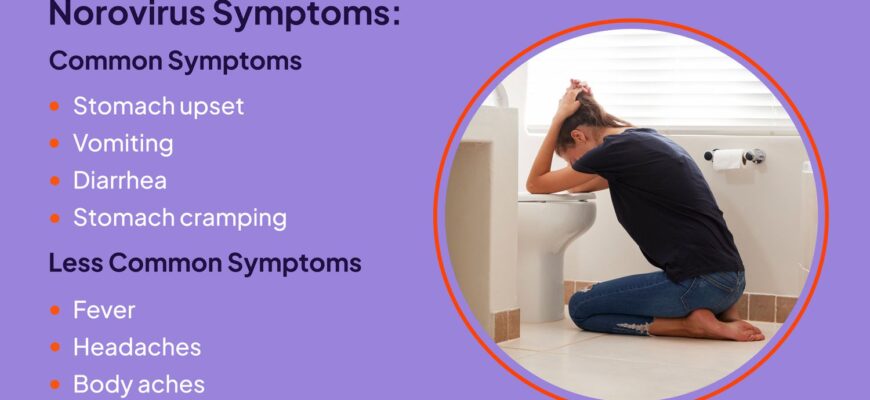
Norovirus is caused by a highly contagious virus that spreads through contaminated food, water, surfaces, and close contact.
Cause
Norovirus is a very contagious virus that causes gastroenteritis (“stomach flu”). Fewer than 20 virus particles can make you sick.
Spread
- Contaminated food or water (shellfish, leafy greens).
- Touching surfaces and then your mouth.
- Contact with infected people.
- Contaminated vomit aerosol.
Impact
The CDC says norovirus causes about 19 to 21 million illnesses a year in the US and is the leading cause of foodborne illness.
Symptoms
Vomiting, diarrhea, cramps. Starts 12 to 48 hours after exposure and lasts 1 to 3 days.
Prevention
Wash hands with soap and water (sanitizer is less effective), cook shellfish and clean with bleach.

Contagious
Until 2 days after recovery.
The virus
Norovirus is a group of single-stranded RNA viruses in the family Caliciviridae. There are at least 10 genogroups, and genogroups I, II and IV infect humans, with GII.4 causing most outbreaks worldwide. New variants arise every few years, and immunity after infection is short and incomplete, so people can catch norovirus many times in life.
How it spreads
Norovirus is extremely contagious. As few as 18 viral particles can cause illness, and an infected person can shed billions of particles in stool and vomit. It spreads by:

- Eating food or drinking water contaminated by an infected handler. Raw oysters, leafy greens, fresh fruit and ready-to-eat foods are common sources.
- Touching contaminated surfaces and then your mouth.
- Direct contact with an infected person.
- Droplets from vomit, which can travel through air and settle on surfaces.
Outbreaks are common on cruise ships, in nursing homes, hospitals, schools and restaurants. Alcohol-based hand sanitizers are less effective against norovirus than handwashing.
Impact
In the US, norovirus causes 19 to 21 million cases of acute gastroenteritis a year, about 109,000 hospitalizations and 900 deaths, mainly among adults aged 65 and older and young children, according to the CDC. Worldwide, it causes an estimated 685 million cases and about 200,000 deaths each year. The illness costs about $2 billion a year in health care and lost productivity in the US. Peak season is November to April.
Symptoms
Symptoms begin 12 to 48 hours after exposure: sudden vomiting, watery diarrhea, nausea, stomach cramps, low fever, headache and body aches. Illness lasts 1 to 3 days. Dehydration is the main risk. There is no specific antiviral drug. Treatment is fluids, ideally oral rehydration solution, and rest.
Prevention
- Wash hands with soap and water for at least 20 seconds after using the toilet, changing diapers, and before preparing or eating food.
- Wash fruits and vegetables, and cook shellfish to at least 145 F.
- Clean surfaces with chlorine bleach solution (1,000 to 5,000 ppm, about 5 to 25 tablespoons of household bleach per gallon of water) after vomiting or diarrhea.
- Wash contaminated laundry in hot water.
- Stay home during illness and for at least 48 hours after symptoms stop. Food handlers should not work for 48 hours after recovery.
- A vaccine is being developed, but none is approved.
Contagious period
People are most contagious while they have symptoms and the first few days after recovering. The virus can be shed in stool for two weeks or more.

Outbreak statistics and contagious period
Norovirus causes about 19 to 21 million illnesses, 109,000 hospitalizations and 900 deaths in the US each year, according to the CDC, and it is the leading cause of foodborne illness outbreaks. Just 18 virus particles can cause infection. The virus persists on surfaces for days to weeks and survives some disinfectants and temperatures up to 140 F. Most infections occur from November to April. People are most contagious while they have symptoms and for the first few days after recovery, though shedding can continue for 2 weeks or longer. Wash hands with soap and water, because alcohol hand sanitizer is less effective against norovirus. Clean surfaces with chlorine bleach solutions at 1,000 to 5,000 ppm. Food workers should stay home for at least 48 hours after symptoms end. Cruise ships and care homes report frequent outbreaks.
Based on data from the CDC







