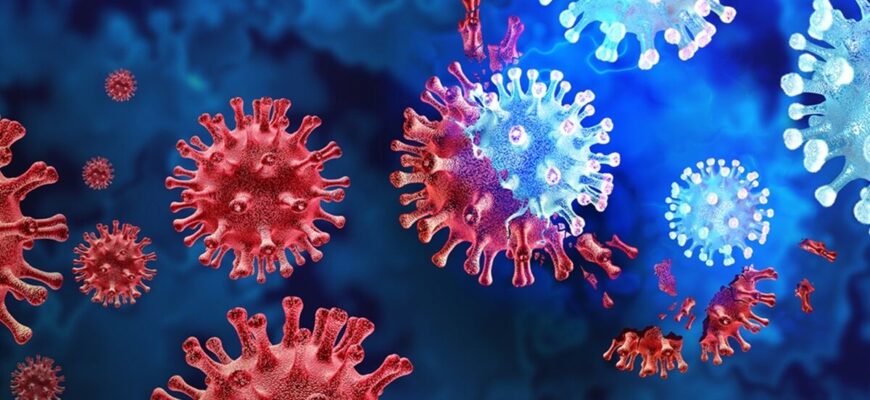
Bacterial infections can be treated with antibiotics, while viral infections cannot and are managed with rest, fluids, or antivirals.
Cause
Bacterial infections are caused by bacteria. Viral infections are caused by viruses.
Treatment
- Bacterial: antibiotics (for example, amoxicillin for strep).
- Viral: rest and fluids, antivirals for flu, HIV and some others, and vaccines for prevention.
Examples
- Bacterial: strep throat, UTI, tuberculosis, many ear infections.
- Viral: common cold, flu, COVID-19, measles.
Symptoms
Overlap. Bacterial infections often are localized and may worsen after 10 days, while viral illness is typically widespread and improves in 7 to 10 days.
Testing
Cultures, rapid tests.
Misuse

Antibiotics don’t work on viruses, and overuse causes resistance.
See a doctor
For fever over 3 days, difficulty breathing or severe symptoms.
How they spread
Both viruses and bacteria can pass through coughs, sneezes, contaminated hands and surfaces. Some bacterial infections also spread through food, water or insect bites.
Typical illnesses
- Viral: common cold, influenza, COVID-19, most sore throats, bronchitis, measles, chickenpox.
- Bacterial: strep throat, urinary tract infections, whooping cough, tuberculosis, many ear and skin infections.

Antibiotic resistance
The CDC estimates that more than 2.8 million antibiotic resistant infections occur in the US each year, with more than 35,000 deaths. Taking antibiotics when not needed increases resistance.
How doctors tell
A doctor may use symptoms, exam and tests such as rapid strep tests, throat or urine cultures, blood tests or PCR tests. Colored mucus alone does not show a bacterial infection.
Duration clues
Viral colds usually peak by days 3 to 5 and improve in 7 to 10 days. A sickness that gets better and then suddenly worse after about 10 days, or a fever lasting more than 3 to 4 days, can point to bacterial infection.
Treatment
- Viruses: rest, fluids, fever reducers, and antivirals for flu, COVID-19 or herpes when appropriate.
- Bacteria: antibiotics, taken as prescribed and finished only as directed.
Prevention
Vaccines, handwashing and staying home when sick reduce both types.
Clinical clues to tell them apart
Viral infections such as colds, flu and COVID-19 usually come with a clear or watery nasal discharge, a gradual sore throat, body aches and a fever that peaks within the first days. Bacterial infections like strep throat, bacterial sinusitis, pneumonia and urinary tract infections often produce more localized symptoms, symptoms lasting longer than 10 days or symptoms that get better and then suddenly worsen (“double worsening”). Color of mucus is not a reliable sign. Doctors use rapid antigen tests, throat swabs, urine cultures, blood tests and chest X-rays to find the cause. A common cold lasts about 7 to 10 days, while a bacterial sinus infection is suspected when symptoms last over 10 days.

Antibiotic resistance
The CDC estimates that at least 2.8 million antibiotic resistant infections occur in the US each year, causing more than 35,000 deaths. About 30 percent of antibiotics prescribed in outpatient settings in the US are unnecessary, according to a CDC study. Antibiotics do not work against viruses, and taking them when not needed increases resistance and risks side effects such as diarrhea and allergic reactions. If a doctor prescribes antibiotics, finish the course as directed. Prevention includes vaccines, hand washing, safe food handling and staying home when sick.
Based on data from the CDC




