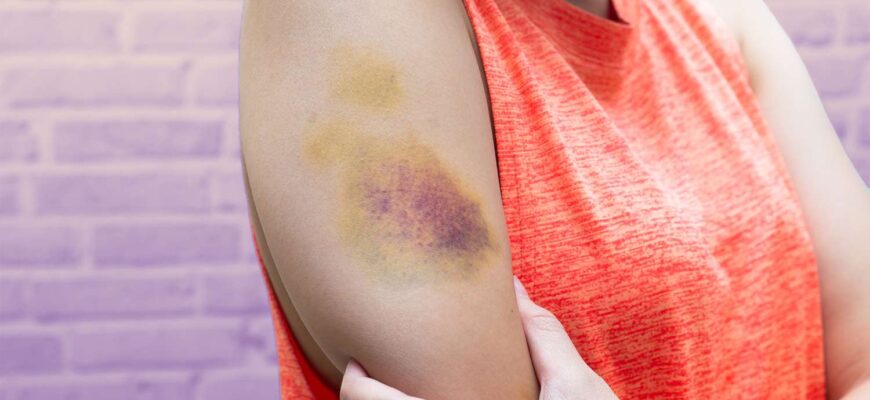
Easy bruising can be caused by age, thin skin, blood thinners, low platelets, or vitamin C or K deficiency. See a doctor if it is new or unexplained.
Common causes
- Age: thinner skin and less fat.
- Blood thinners and aspirin.
- Low platelet count.
- Vitamin C or K deficiency.
- Corticosteroids and some supplements (fish oil, ginkgo).
- Liver disease.
- Bleeding disorders (von Willebrand disease).
- Sun-damaged skin (senile purpura).
Women
Women bruise more easily than men.
What helps
Eat a balanced diet, protect your skin and avoid injury.
See a doctor if
You bruise often without cause, have large bruises, bleeding gums or nosebleeds, or sudden new bruising.
Tests
Blood counts and clotting tests.
Warning

Unexplained bruises on children should be evaluated.
How bruises form
A bruise forms when small blood vessels (capillaries) under the skin break, and blood leaks into surrounding tissue. The color changes from red or purple to green and yellow as the body breaks down hemoglobin, usually over 1 to 2 weeks.
Normal reasons for easy bruising
- Age: skin becomes thinner and loses protective fat with age.
- Sun damaged skin, especially on forearms.
- Being female. Women bruise more easily than men, partly because of skin structure and hormones.
- Genetics.
- Light skin where bruises are more visible.
Medications
Aspirin, ibuprofen, naproxen, warfarin, direct oral anticoagulants like apixaban, clopidogrel, steroids (oral or inhaled in high doses), and some antidepressants and supplements such as fish oil, ginkgo and vitamin E can make bruising easier.

Nutrition
Vitamin C deficiency (scurvy) and vitamin K deficiency can cause easy bruising and bleeding gums.
Medical conditions
- Low platelets (thrombocytopenia).
- Von Willebrand disease, the most common inherited bleeding disorder, which affects about 1% of people.
- Hemophilia.
- Liver disease.
- Leukemia and other blood cancers.
Helpful care
Apply a cold pack for 10 to 20 minutes right after an injury, then elevate the area. After 48 hours, warm compresses can help the blood reabsorb.
Seek medical advice if
- Large bruises appear without injury.
- Bruising is paired with frequent nosebleeds, bleeding gums, heavy periods or blood in urine or stool.
- A bruise lasts more than 4 weeks.
- You see unexplained bruises on a child.
Tests
Doctors check blood counts, clotting tests and liver function.
Blood clotting and vessel factors
Bruising happens when small blood vessels break under the skin. With age, skin becomes thinner and loses fat, so older adults bruise more easily, and women tend to bruise more than men. Common contributors include aspirin, NSAIDs, warfarin, clopidogrel, corticosteroids and supplements such as fish oil and ginkgo. Low vitamin C or vitamin K can weaken vessels or clotting. Easy bruising may also reflect low platelets, liver disease, leukemia or inherited disorders such as von Willebrand disease, which affects about 1 percent of the population.
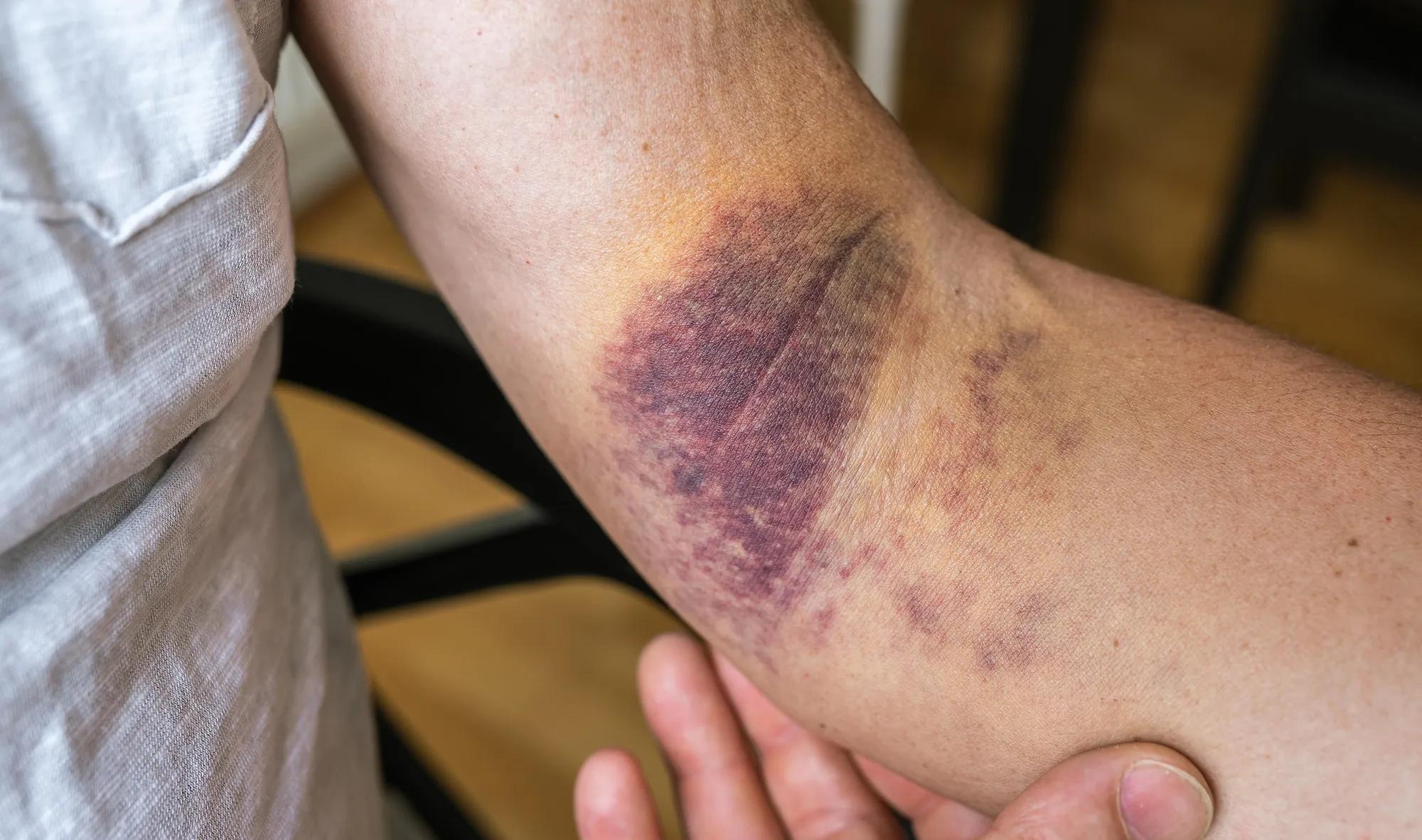
Evaluation and care
Doctors check history of bleeding, medicines and family patterns and order tests such as a complete blood count, prothrombin time (PT/INR) and activated partial thromboplastin time (aPTT). Apply ice for 10 to 15 minutes after an injury, elevate the area and avoid blood thinning pain relievers unless prescribed. See a doctor if bruises are large and unexplained, appear on the trunk, back or face without injury, come with nosebleeds, bleeding gums or heavy periods, or if you bruise suddenly after starting a medicine. Unexplained bruises in children should be evaluated.
Based on data from the National Heart, Lung, and Blood Institute and the Mayo Clinic