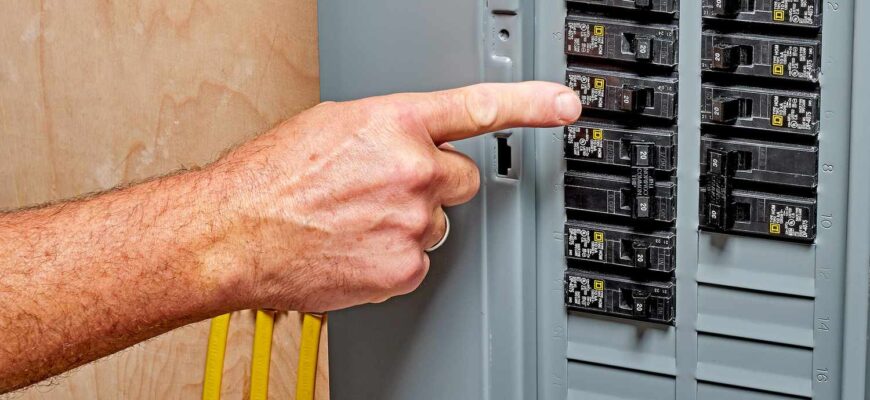
A breaker trips when a circuit is overloaded, has a short circuit or ground fault, or the breaker is faulty. Call an electrician if it keeps happening.
Main causes
- Overload: too many devices on one circuit.
- Short circuit: hot wire touching neutral or ground.
- Ground fault: current going to ground (GFCI trips).
- Arc fault (AFCI).
- Faulty or old breaker.
- Loose wiring.
What to try
- Unplug devices on the circuit and reset the breaker.
- If it trips again with nothing plugged in, there may be a wiring fault.
Safety
A burning smell, hot panel or sparks means turn off the main breaker and call an electrician immediately.
Don’t
Keep resetting a breaker that trips repeatedly.
Costs

An electrician charges $100 to $250 per hour.
Fire risk
The NFPA says electrical failures cause about 46,000 home fires per year in the US.
How a breaker works
A circuit breaker protects wiring from overheating. It trips when current exceeds its rating, using a bimetallic strip for sustained overloads and an electromagnet for sudden surges. A standard branch circuit is 15 amps (14 gauge wire) or 20 amps (12 gauge wire), and the rule for continuous loads is to use no more than 80% of the rating, so 12 amps on a 15 amp circuit.
Main causes

- Overload: too many devices on one circuit, such as a space heater, toaster and microwave.
- Short circuit: a hot wire touches a neutral wire, causing a large surge. It often trips instantly and may produce a pop or burnt smell.
- Ground fault: current escapes to ground, common in damp areas. GFCI breakers trip at 4 to 6 milliamps.
- Arc fault: an arcing connection or damaged cord. AFCI breakers are required in most living areas by the National Electrical Code.
- A worn or faulty breaker that trips below its rated load, common in panels over 25 to 30 years old.
- Loose wiring at outlets, switches or the panel.
What to try
- Unplug everything on the circuit, reset the breaker by pushing it fully to off and then on.
- Plug in devices one at a time to find the one that causes tripping.
- Move high-wattage appliances such as space heaters to separate circuits.
- Check cords for damage and outlets for heat or scorch marks.
- For a GFCI or AFCI breaker, press the test button then reset.
Safety
Never tape a breaker on, or replace it with a larger one. The wire in the wall is sized for the breaker, and a bigger breaker lets the wire overheat. Electrical failures cause around 35,000 US home fires a year, according to the NFPA. Dry hands, standing on a dry surface, and turning off the main breaker are essential before opening a panel.
When to call an electrician
- The breaker trips repeatedly with nothing plugged in.
- It feels hot, buzzes, smells burnt or shows scorch marks.
- Lights flicker or dim when appliances run.
- The panel is a brand like Federal Pacific or Zinsco, which have known defects.
- You need a new circuit or a panel upgrade.
Costs
Replacing a standard breaker usually costs $100 to $250. A new dedicated circuit costs $300 to $1,000 depending on length. A full panel upgrade costs $1,500 to $4,000.
Breaker types and signs
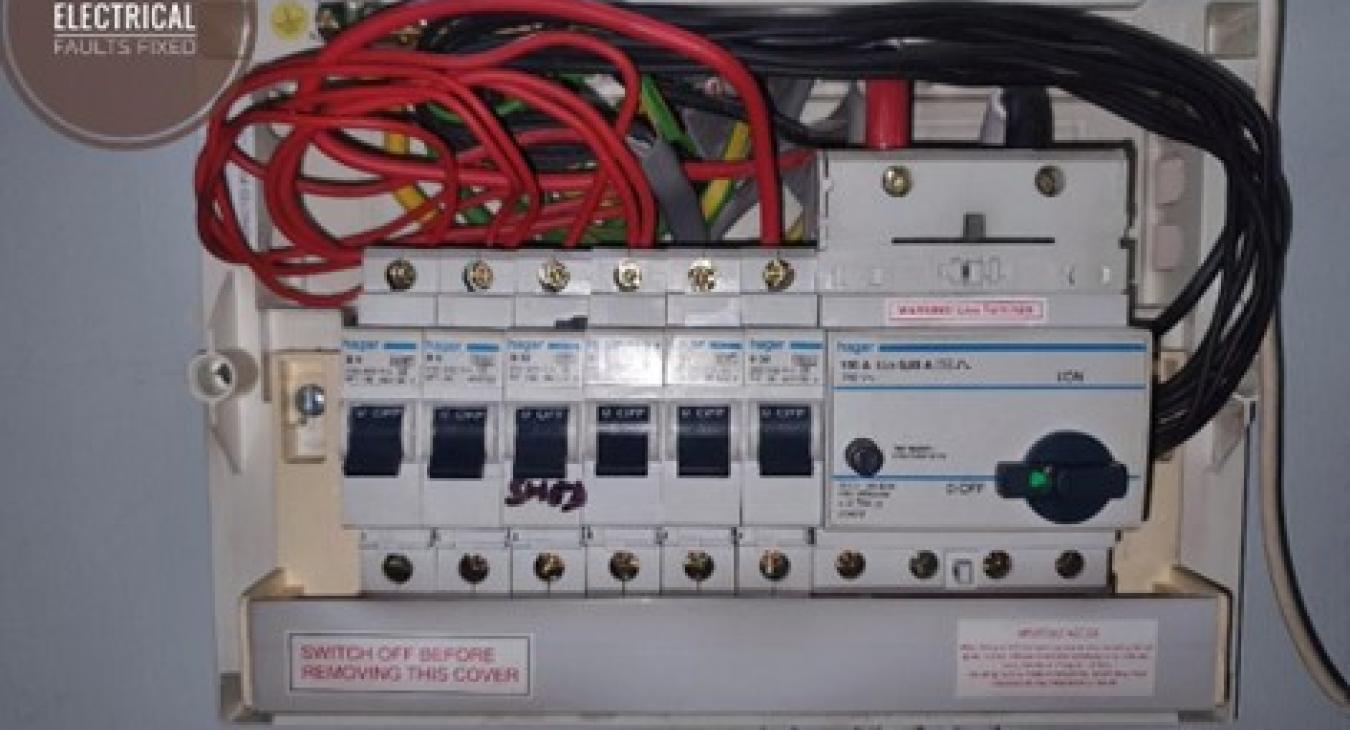
Circuit breakers trip to prevent overheating from overloads, short circuits and ground faults. A standard 15 amp breaker trips when load exceeds 15 amps, about 1,800 watts at 120 volts. A 20 amp breaker carries 2,400 watts. Common culprits are space heaters, hair dryers, microwaves and toasters on the same circuit. A breaker that trips immediately when reset points to a short circuit or ground fault. Arc-fault (AFCI) and ground-fault (GFCI) breakers trip on smaller hazards. A hot or buzzing panel, scorch marks or a burning smell signal a hazard, so shut off the circuit and call a licensed electrician.
Based on data from the National Fire Protection Association and the National Electrical Code







