
Scalp hair grows about half an inch a month, driven by genetics, hormones, and nutrition. It may seem fast if it is thick or you have recently trimmed it.
Normal rate
Scalp hair grows about 0.5 inch (1.25 cm) per month, or 6 inches a year.
What affects it
- Genetics.
- Age: growth slows with age.
- Hormones, such as during pregnancy.
- Nutrition: protein, iron and biotin.
- Health conditions and medications.
Why it may seem fast
Thick hair, trims that remove split ends, and lack of breakage can make hair appear to grow faster.
Myths
Trimming does not speed growth. It only removes damage.
Average growth rate
Scalp hair grows about 0.3 to 0.5 millimeters per day, around 1 centimeter (0.4 inches) per month or 6 inches per year. It is a normal range, and genetics set the speed.

Growth cycle
- Anagen: active growth, lasting 2 to 7 years.
- Catagen: transition, about 2 to 3 weeks.
- Telogen: rest, about 3 months, after which the hair sheds.
About 85% to 90% of scalp hairs are in the growth phase at any moment.
Factors that influence length
Genetics, age, hormones, nutrition, health and hair type. Hair growth is generally fastest between ages 15 and 30 and slows later.
Possible medical reasons for fast growth

Rapid hair or excessive hair growth in unusual places, called hirsutism or hypertrichosis, can happen with hormonal conditions like polycystic ovary syndrome, thyroid disease or some medications such as minoxidil, phenytoin and cyclosporine.
Pregnancy
Elevated estrogen keeps hair in the growth phase longer, giving thicker hair. After delivery, many women see shedding as hair returns to a normal cycle.
Healthy hair habits
- Eat enough protein, iron, zinc and vitamins D and B12.
- Limit heat styling and harsh chemicals.
- Treat the scalp gently.
- Trim ends to prevent breakage.
Myths
Cutting hair does not make it grow faster. Biotin supplements help only if you are deficient, which is rare. Shaving does not make hair thicker.
See a doctor if
Growth is sudden or excessive, with irregular periods, acne or deepening voice.
Growth rate and cycle
Scalp hair grows about 0.5 inch (1.25 cm) per month, roughly 6 inches a year, and the rate varies a little with age, genetics and ethnicity. Each follicle cycles through the anagen growth phase lasting 2 to 7 years, a short catagen transition and the telogen resting phase of about 3 months, before shedding. About 85 to 90 percent of hairs are in the growth phase at a given time, and shedding 50 to 100 hairs a day is normal. The scalp has about 100,000 hairs. A longer anagen phase means longer potential length.
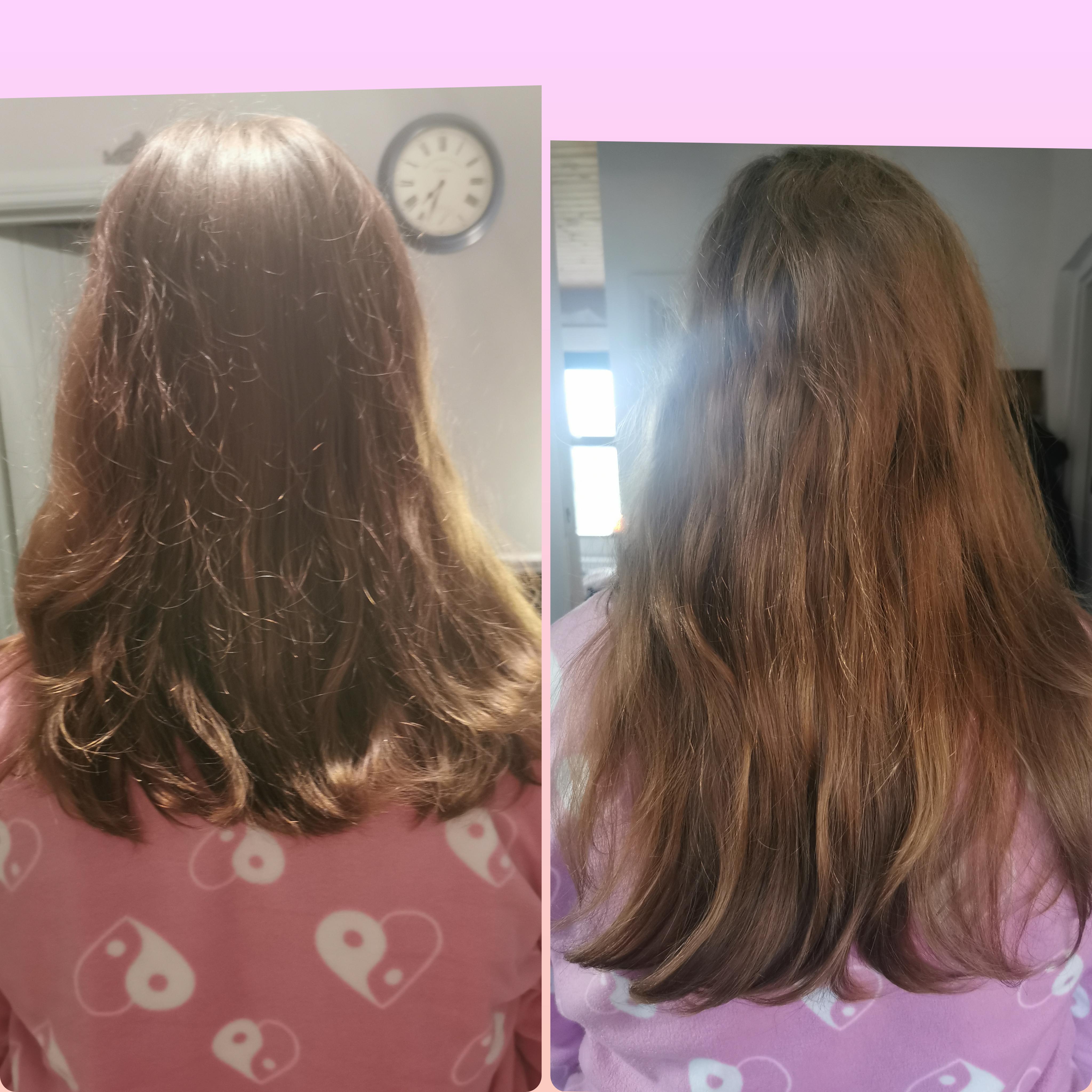
Factors that make hair seem fast
Pregnancy hormones lengthen the growth phase, so hair often looks thicker, then sheds after delivery. A diet with enough protein, iron, zinc and biotin supports growth, but supplements help mainly when there is a deficiency. Excessive new growth of coarse hair on the face or body in women can be a sign of conditions such as polycystic ovary syndrome or thyroid disease and merits a medical check. Healthy habits include gentle brushing, limiting heat styling and regular trims, which do not speed growth but reduce breakage that hides length.
Based on data from the American Academy of Dermatology and the NIH







