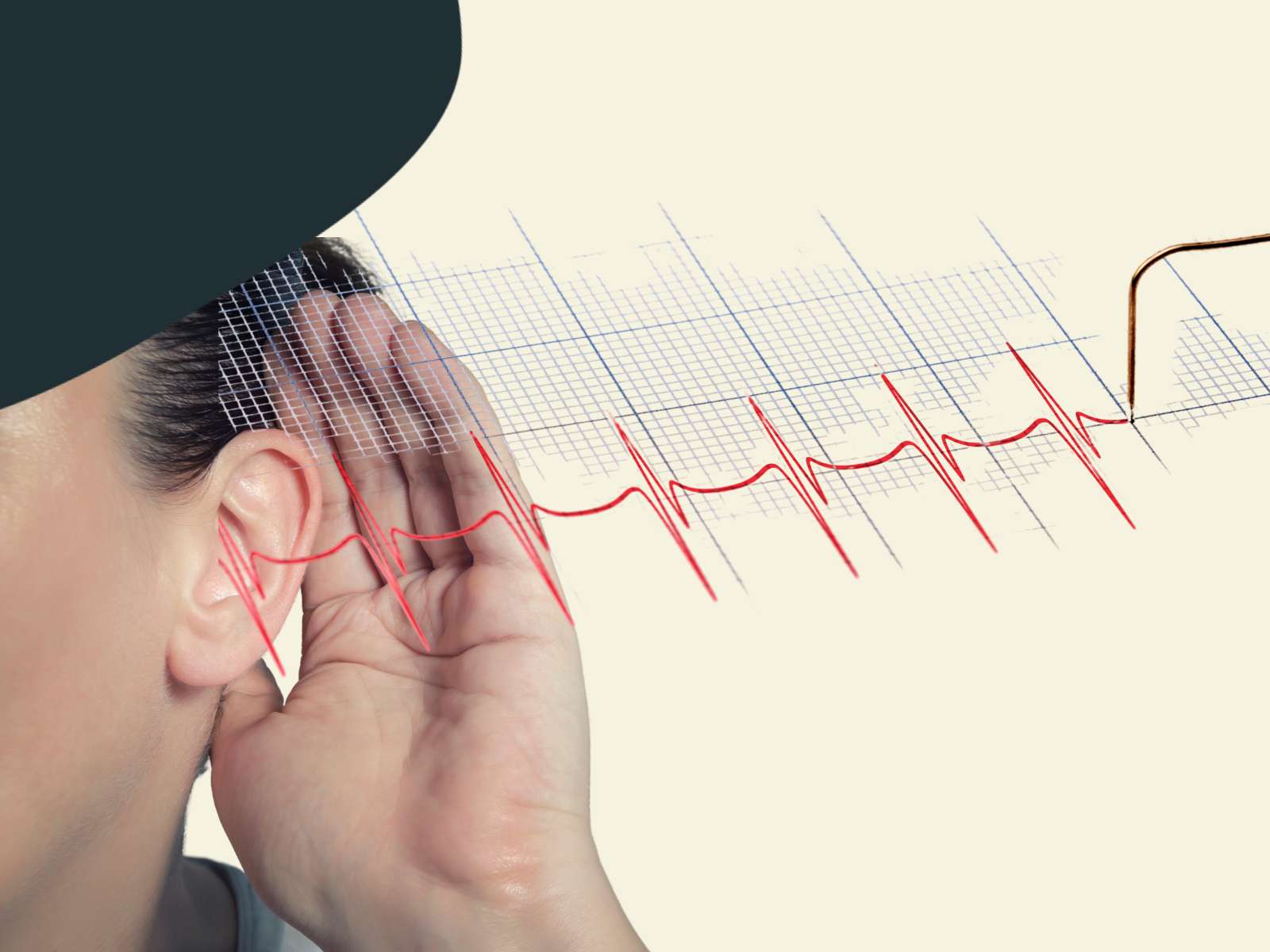
Hearing your heartbeat in your ear (pulsatile tinnitus) can be caused by high blood pressure, earwax, or a blood flow problem. See a doctor if it persists.
What it is
Pulsatile tinnitus is hearing your heartbeat in the ear.
Common causes
- High blood pressure.
- Earwax or middle ear fluid.
- Anemia.
- Thyroid problems.
- Blood vessel abnormalities.
Is it serious
Often not, but sometimes it signals a vascular problem.
See a doctor
Promptly, for evaluation, especially if it’s in one ear.
Emergency
Sudden hearing loss or neurological symptoms.
Pulsatile tinnitus
Hearing your pulse in the ear is called pulsatile tinnitus. Unlike constant ringing, it beats in time with your heartbeat. It affects an estimated 4% of people with tinnitus.
Common benign causes
- Earwax blockage or fluid, which makes internal sounds more noticeable.
- Lying on the ear in a quiet room, as sounds are amplified.
- Anxiety, exercise, caffeine or high blood pressure that increase heart rate and blood flow.
- Anemia, thyroid disease and pregnancy that increase blood flow.
Vascular causes
- Narrowed arteries (atherosclerosis) in the neck or near the ear, which make turbulent flow.
- Abnormal connections between arteries and veins (arteriovenous malformations or dural fistulas).
- Carotid artery or jugular vein abnormalities.
- Glomus tumors (paragangliomas) in the middle ear.
- Idiopathic intracranial hypertension (high pressure around the brain), more common in women with obesity, along with headaches and vision changes.
Other causes

Middle ear problems such as Eustachian tube dysfunction, otosclerosis or a jaw joint (TMJ) disorder.
Is it serious
Many causes are harmless, but pulsatile tinnitus should always be evaluated, since a minority are related to vascular disease or tumors.
What a doctor does
Examination of ears and neck, listening for bruits, hearing test, blood pressure and blood tests, and imaging such as MRI/MRA, CT angiogram or ultrasound.
Treatment
Depends on the cause: managing blood pressure, treating anemia, surgery or endovascular treatment for vascular lesions, and sound therapy.
Emergency
Seek urgent care if the sound begins suddenly with severe headache, weakness, facial droop, vision loss or after a head injury.
Causes of hearing your pulse
Hearing the heartbeat in the ear is called pulsatile tinnitus. Causes include high blood pressure, anemia, an overactive thyroid and pregnancy, which increase blood flow. Narrowing of the carotid artery from atherosclerosis, abnormal connections between arteries and veins, idiopathic intracranial hypertension and vascular tumors are other causes. Earwax blocking the canal or fluid behind the eardrum can make normal blood flow sounds more noticeable. A fast heartbeat from exercise or anxiety can also make it loud.

Evaluation and treatment
A doctor will check blood pressure and listen over the neck and ear, and imaging such as CT angiography or MR angiography may be ordered to look at blood vessels. Treating the underlying cause often resolves the sound. See a doctor if it lasts more than a few days, is in one ear only, or comes with dizziness, headache, vision changes, hearing loss or facial weakness. Call 911 for sudden severe headache, weakness, slurred speech or vision loss with pulsing sounds.
Based on data from the American Academy of Otolaryngology and the Mayo Clinic