Painful period cramps are caused by the uterus contracting to shed its lining, driven by hormone-like chemicals called prostaglandins. Endometriosis or fibroids can make them worse.
Cause
Painful periods (primary dysmenorrhea) are caused by prostaglandins, chemicals that make the uterus contract to shed its lining. High levels cause stronger cramps.
How common
About 50 to 90 percent of menstruating people experience cramps, and 10 to 15 percent have severe pain.
Secondary dysmenorrhea
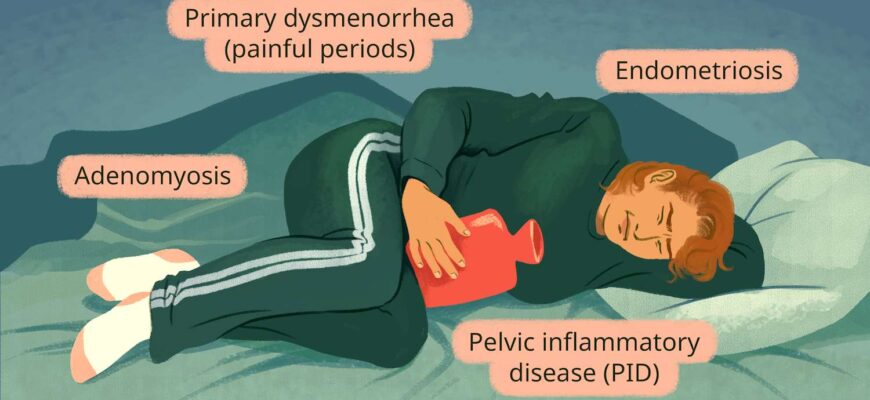
Pain from conditions such as endometriosis, fibroids, adenomyosis and pelvic inflammatory disease.
Relief
- Heat pad.
- NSAIDs (ibuprofen, naproxen) started at the first sign.
- Exercise.
- Hormonal birth control.
- Magnesium and omega-3 may help.
See a doctor if
Pain is severe, interferes with life, begins later in life or worsens over time.

Teens
Cramps often ease with age and after childbirth.
What causes the cramps
Painful periods, called dysmenorrhea, are mostly caused by prostaglandins, hormone-like chemicals produced by the uterine lining. When the lining sheds, prostaglandin levels rise and make the uterus contract, which squeezes blood vessels and briefly cuts oxygen to the muscle, causing pain. Higher prostaglandin levels cause stronger cramps, and they can also cause nausea, diarrhea and headache.
How common
Up to 90% of adolescents and 50% to 90% of women of reproductive age experience menstrual pain, and 10% to 15% have pain severe enough to interfere with school or work, according to ACOG. It is a leading cause of missed school days among teenage girls.
Primary and secondary dysmenorrhea
Primary dysmenorrhea is menstrual pain without a pelvic disease. It begins within a year or two of the first period, starts 1 to 2 days before bleeding and lasts 2 to 3 days. Secondary dysmenorrhea is caused by a condition, and tends to start later in life, may worsen over time and last longer.
Secondary causes
- Endometriosis: tissue like the uterine lining grows outside the uterus, affecting about 10% of women.
- Adenomyosis: tissue grows into the uterine wall.
- Uterine fibroids.
- Pelvic inflammatory disease.
- Cervical stenosis.
- Copper IUDs.
Relief
- NSAIDs such as ibuprofen (400 mg) or naproxen, starting at the first sign of pain or bleeding, and taken with food for 2 to 3 days. They block prostaglandins and work in about 70% to 80% of women.
- Heat from a heating pad or warm bath has been shown to work about as well as ibuprofen in some studies.
- Hormonal birth control, which thins the lining and lowers prostaglandins.
- Regular exercise.
- Some evidence supports magnesium, vitamin B1 and omega-3 supplements, and TENS devices.
- Gentle massage and yoga.
See a doctor if
Pain is severe, is not helped by medicine, starts after age 25, gets worse, comes with heavy bleeding, pain during sex, fever or unusual discharge, or interferes with daily life. Tests include pelvic exam and ultrasound. Laparoscopy diagnoses endometriosis.
Teens
Cramps in teenagers are usually primary. Talk to a doctor if they miss school or activities each month. Treatment is safe and effective.
Chemistry and clinical numbers
Menstrual cramps are caused by prostaglandins, which make the uterus contract to shed its lining, and women with more severe cramps tend to have higher prostaglandin levels. Up to 90 percent of women have some cramping, and about 10 to 15 percent have severe pain that disrupts daily life, according to ACOG. Pain usually starts 1 to 2 days before bleeding and lasts 2 to 4 days. NSAIDs such as ibuprofen (400 mg every 6 to 8 hours) or naproxen work by blocking prostaglandins and work best when started at the first sign of pain or bleeding. Heat at 104 F, applied with a heating pad, was found to be as effective as ibuprofen in one study. Hormonal birth control, exercise and, in some studies, vitamin B1 or magnesium may reduce pain. Seek care if pain is new after age 25, gets worse over time, or comes with heavy bleeding, fever or pain during sex, since endometriosis affects about 1 in 10 women.
Based on data from ACOG and the Mayo Clinic