The internet is a global network of connected computers that exchange data using shared rules called protocols, through internet service providers, routers, and servers.
The basics
The internet is a global network of networks that exchange data using shared rules called protocols (TCP/IP).
How it works
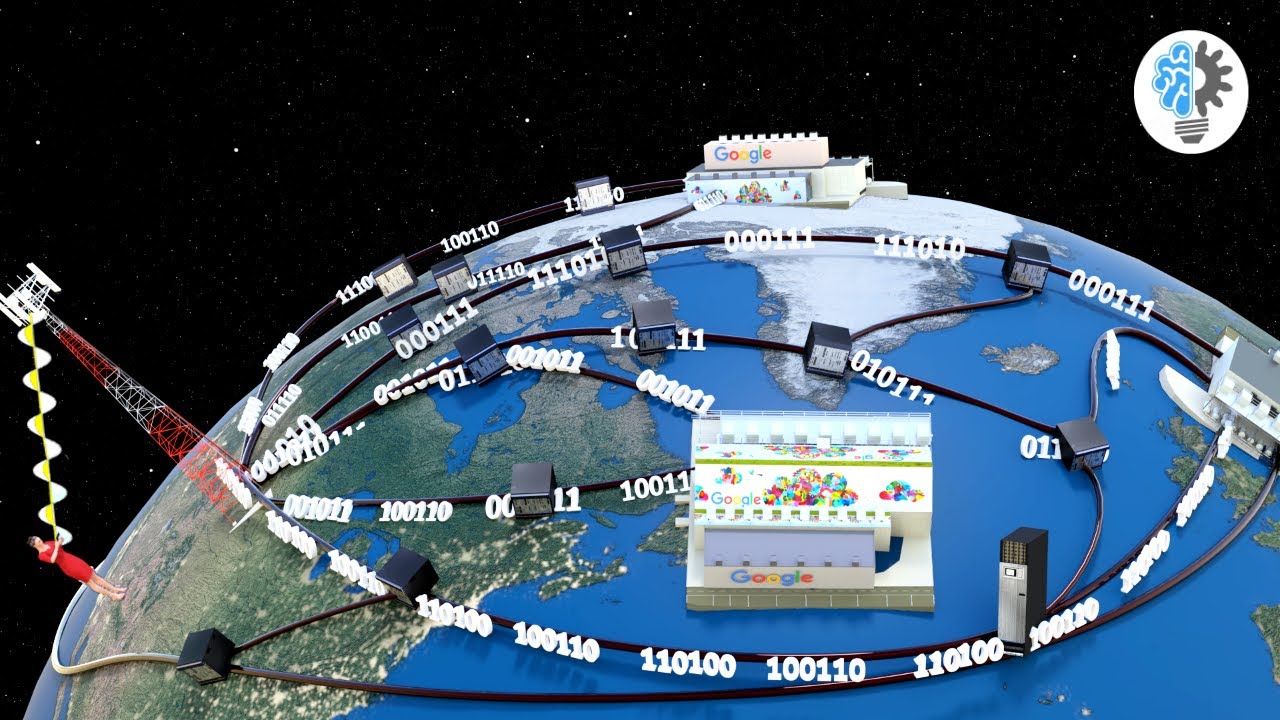
- Your device connects through an internet service provider (ISP).
- Data is split into packets, each with an address.
- Routers forward the packets across networks.
- The DNS translates names (google.com) to IP addresses.
- The destination reassembles them.
Physical layer
Over 95 percent of intercontinental data travels via undersea fiber-optic cables.
Web versus internet
The web is a service on the internet using HTTP.
History
ARPANET started in 1969. The web was invented by Tim Berners-Lee in 1989.
Users
About 5.4 billion people use the internet (ITU, 2023).
The basics
The internet is a global network of networks that connects billions of devices using shared rules called protocols. The key set is TCP/IP, which breaks data into small packets, routes them across the network and reassembles them at the destination. About 5.4 billion people, around 67% of the world, used the internet in 2023, according to the International Telecommunication Union.
How a request works
- You type a web address. Your device asks a Domain Name System (DNS) server to translate the name into an IP address, such as 142.250.190.78.
- Your device sends a request through your router to your internet service provider (ISP).
- Packets travel through routers across multiple networks, each deciding the next hop.
- The destination server receives the packets, and sends back web page data.
- Your browser assembles the data and shows the page using HTTPS, which encrypts traffic.

The trip often takes under 100 milliseconds.
Physical layer
The internet depends on physical infrastructure. Undersea fiber cables carry about 95% of international data, with around 500 cables in service. Data centers store content, and Internet exchange points let networks connect. Last-mile links include fiber, cable, DSL, satellite and cellular networks. Wireless connections still run over wires at the core.
Web versus internet
The web is a service that runs on the internet, made of websites accessed by browsers using HTTP. Other services on the internet include email, video calls, online games, file transfer and streaming. Created by Tim Berners-Lee in 1989 at CERN, the web is only one part.
History
ARPANET, funded by the US Department of Defense, sent its first message on October 29, 1969 between UCLA and Stanford. The TCP/IP protocols were adopted on January 1, 1983, a date considered the birth of the internet. The first web browser appeared in 1990, and the Mosaic browser in 1993 popularized it.
Users and governance
No one owns the internet. Organizations like ICANN manage domain names and IP addresses, the IETF develops standards, and regional registries allocate IP addresses. IPv6 was developed because IPv4 allows only about 4.3 billion addresses, while IPv6 supports 340 undecillion.
Security
HTTPS uses TLS encryption to protect data in transit. Use strong, unique passwords, two-factor authentication and updated software to stay safe.

Numbers behind the network
About 5.5 billion people, or roughly 68 percent of the world’s population, used the internet in 2024, according to the International Telecommunication Union. Around 1.2 million kilometers of undersea fiber optic cables, in about 500 systems, carry more than 95 percent of international data traffic. The Domain Name System (DNS) translates names like example.com into IP addresses, and there are 13 logical root server identities, run by organizations such as Verisign and NASA. Data is split into packets, which can travel different routes and are reassembled at the destination using TCP. IPv4 has about 4.3 billion addresses, which ran out, so IPv6 with 340 undecillion addresses is being rolled out. The encryption used for secure websites (HTTPS) relies on TLS, which protects data in transit.
Based on data from the International Telecommunication Union and ICANN