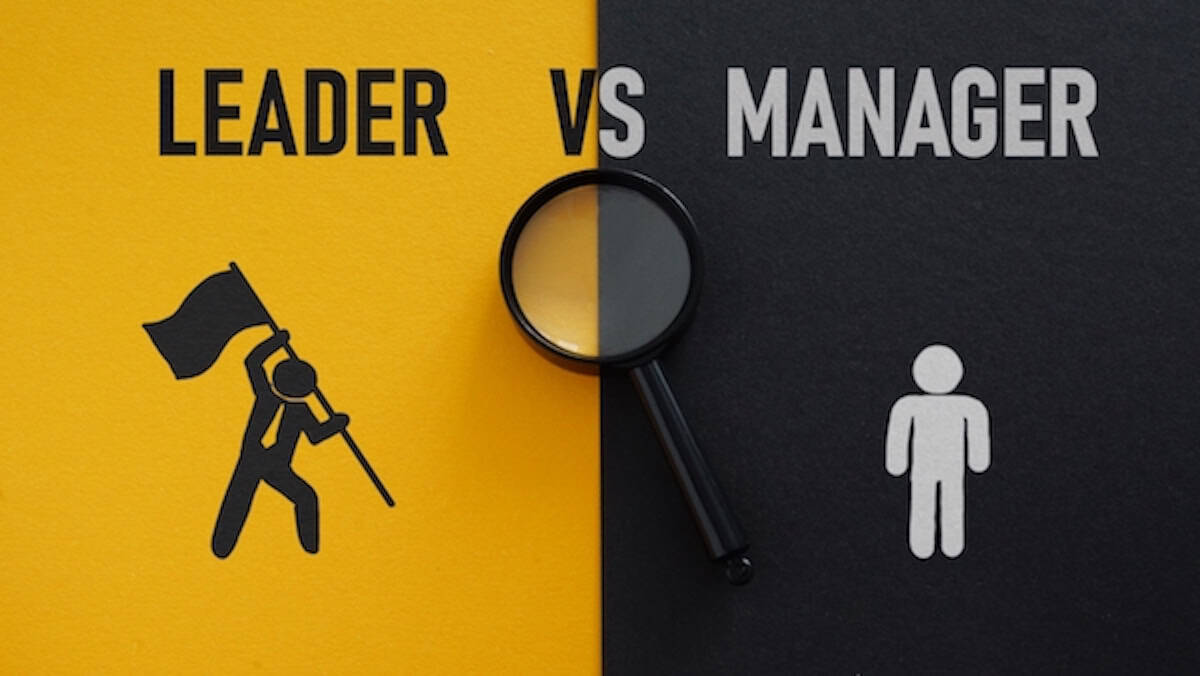
Leaders set a vision and inspire people, while managers organize resources and run day-to-day processes.
Leaders
Leaders set a vision, inspire and motivate people, and drive change. They focus on direction and influence, and people follow by choice.
Managers
Managers plan, organize, coordinate resources and ensure goals are met. They focus on processes, budgets and performance.
Differences
- Leaders ask “what and why”; managers ask “how and when.”
- Leaders innovate; managers administer.
- Leadership is influence; management is authority.
Overlap
Good managers lead, and leaders manage.
Source
John Kotter of Harvard Business School separated the roles in 1990: management copes with complexity, leadership with change.
Skills
Leaders need vision. Managers need organization.

Tip
Most roles need both.
Core skill sets
- Managers: planning, budgeting, organizing, delegating and monitoring.
- Leaders: communication, vision, empathy, influence and coaching.
Research by the Center for Creative Leadership shows that effective executives often use both skill sets, with the balance changing as they move higher in an organization.
Who follows whom
People follow a manager because the job requires it, and they follow a leader because they choose to. Followers of leaders tend to show higher engagement and trust.

Risk and change
Management reduces risk by making processes predictable. Leadership accepts calculated risk to pursue change. A company needs both, as strong management without leadership can become rigid, and leadership without management can lead to chaos.
Examples
A project manager makes sure a software release stays on time and on budget. A technical lead inspires the team to adopt new methods and tackle a more ambitious product.
Gallup data
Gallup research finds that only about 1 in 10 people has the natural talent to manage well, and that managers account for at least 70% of the variance in employee engagement across business units.
Becoming a leader
- Get feedback from your team and peers.
- Practice active listening.
- Take on stretch projects.
- Find a mentor.
- Study decision making and ethics.
Titles do not equal skill
Not every manager is a leader, and not every leader holds a formal title. Informal leaders emerge in teams based on trust and expertise.
Measuring effectiveness
Common measures include team turnover, engagement scores, goal completion and 360 degree reviews.
Management theory landmarks
Henry Mintzberg described ten managerial roles in 1973, grouped as interpersonal (figurehead, leader, liaison), informational (monitor, disseminator, spokesperson) and decisional (entrepreneur, disturbance handler, resource allocator, negotiator). Warren Bennis wrote that managers do things right and leaders do the right thing. Kurt Lewin’s 1939 study identified authoritarian, democratic and laissez faire leadership styles, and later models include the Blake Mouton managerial grid and situational leadership. Management is tied to systems, budgets and processes, and leadership to vision, inspiring people and initiating change. In practice, organizations need both, and people at any level can lead.
Developing leadership skill
Leadership skills such as communication, emotional intelligence, delegation and feedback can be learned. Employees often follow leaders for trust and purpose and follow managers for assigned authority. Having a title does not guarantee leadership ability, and a study by Gallup found that managers account for at least 70 percent of the variance in team engagement, which shows how much their behavior matters. Practical steps include seeking mentors, taking on cross-functional projects, asking for 360 feedback and practicing coaching conversations. Measure effectiveness through team outcomes, turnover, engagement scores and clear goals.
Based on data from Harvard Business Review and Gallup