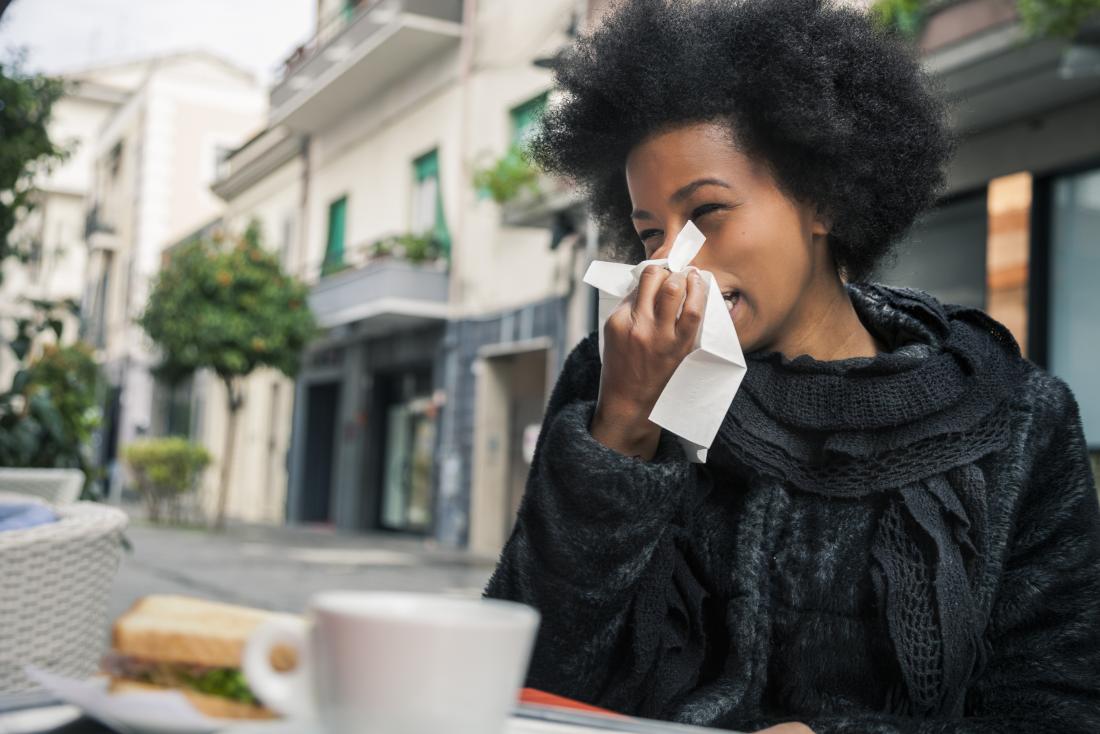
Sneezing after eating can be caused by gustatory rhinitis, a nerve reaction to hot or spicy food, or by eating a large meal.
Gustatory rhinitis
A runny nose or sneezing right after eating, especially hot or spicy food, is called gustatory rhinitis. It’s a nerve reaction (parasympathetic) that makes nasal glands release fluid. It is not an allergy.
Other causes
- Snatiation: a rare genetic trait that causes sneezing after a large meal.
- Food allergies.
- Chili and capsaicin.
- Alcohol.
- Allergic rhinitis.
Is it harmful
Usually not.
What helps
Avoid spicy foods or use an ipratropium nasal spray (prescription).
See a doctor if
Symptoms are severe, or come with hives, swelling or trouble breathing (possible allergy).
Emergency
Swelling of lips or throat needs 911.
Fact
Photic sneezing happens in bright light.
Gustatory rhinitis
Gustatory rhinitis is a runny nose or sneezing after eating, with no allergy or infection. It’s a non-allergic type of rhinitis triggered by the nerves in the nose reacting to foods, especially hot and spicy foods.
Typical triggers
- Hot soups and drinks.
- Spicy food containing capsaicin, such as chili peppers.
- Wasabi, horseradish and black pepper.
- Alcohol, especially wine and beer.
- Cold foods in some people.
Nerve explanation

The trigeminal nerve senses heat and irritation. When it detects spicy food, it can signal the parasympathetic system to increase mucus secretion in the nose. This reflex is thought to clear irritants.
Photic sneeze reflex
About 18% to 35% of people sneeze when exposed to bright light, as a separate trait. A related reflex happens in some people after a large meal (“snatiation”), which is rare and thought to be inherited.
Allergy versus reflex
A true food allergy typically causes hives, swelling, vomiting, wheezing or itching in the mouth. Sneezing alone after a meal is rarely a food allergy, but symptoms of allergy need medical attention.
What helps
- Avoid the foods that trigger it.
- Use ipratropium nasal spray before meals, which works for gustatory rhinitis. It requires a prescription.
- Saline rinses.
- Keep a food diary.
Other causes
Eating in a dusty place, strong aromas, or dry nasal passages can also lead to sneezing.
When to see a doctor
See a doctor if sneezing is paired with breathing difficulty, swelling of the lips or face, or if it is constant.
Gustatory rhinitis and who gets it
Sneezing or a runny nose triggered by eating is called gustatory rhinitis. It is a non allergic reaction in which nerves in the nose respond to hot or spicy foods, sometimes even to cold drinks or alcohol. Capsaicin in chili peppers stimulates sensory nerves, and the autonomic nervous system causes the lining of the nose to swell and produce watery mucus. It is more common in older adults and people with chronic nasal conditions. Studies estimate that gustatory rhinitis affects up to about a third of people with non allergic rhinitis, according to allergy research reviews.

Related sneeze reflexes and care
The photic sneeze reflex, also called ACHOO syndrome, makes about 18 to 35 percent of people sneeze when they step into bright light, and it is inherited. A rare condition called snatiation is sneezing after a large meal when the stomach is full. For gustatory rhinitis, avoiding trigger foods or using ipratropium nasal spray, a prescription medicine, helps. An antihistamine will not help if the cause is not allergy. See an allergist if sneezing happens with hives, lip swelling, wheezing or after eating certain foods, since these may point to a true food allergy.
Based on data from the American Academy of Allergy, Asthma and Immunology and the Mayo Clinic