
Wildfires start from lightning and from human activity such as campfires, sparks, discarded cigarettes, and power lines, and spread in dry, windy conditions.
Natural causes
Lightning is the main natural cause. Volcanic eruptions and spontaneous combustion are rare.
Human causes
The US Forest Service says humans cause almost 85 percent of wildfires. Common sources:
- Unattended campfires.
- Discarded cigarettes.
- Equipment sparks and vehicles.
- Power lines.
- Arson and debris burning.
What a fire needs
Fuel, oxygen and heat (the fire triangle).
Spread
Fires spread fastest uphill, in wind and dry fuel.
Prevention

Fully extinguish campfires (drown, stir, drown), follow burn bans, and clear defensible space.
Report
Call 911.
Natural causes
Lightning is the leading natural cause of wildfires. Lightning starts about 10% to 15% of US wildfires, but they account for about half of the area burned, since they strike remote areas and often happen in dry thunderstorms. Other natural causes include volcanic eruptions, spontaneous combustion of dry organic matter, and rarely, falling rocks that spark.
Human causes
Humans cause about 85% to 90% of wildfires in the US, according to the National Park Service. Typical sources:
- Campfires left unattended or not fully out.
- Discarded cigarettes.
- Debris burning (burning brush or trash), a leading cause in some regions.
- Equipment use, such as mowing dry grass, chains dragging from trailers or sparks from power tools.
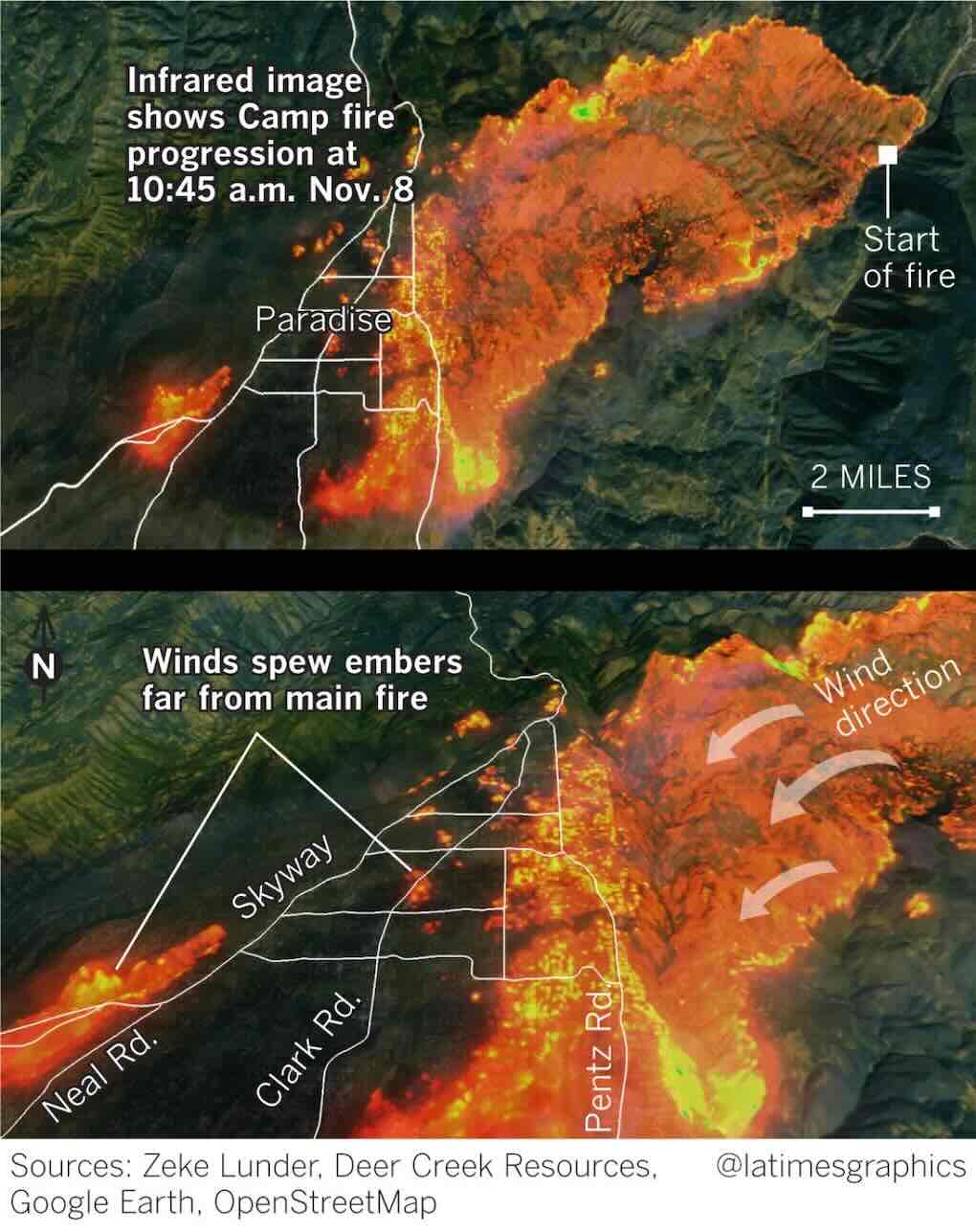
- Power lines and transformers. In 2018, the Camp Fire killed 85 people and destroyed about 18,000 structures.
- Arson.
- Fireworks and target shooting.
- Vehicles and exhaust systems.
What a fire needs
The fire triangle has three parts: heat, fuel and oxygen. Fuels are grass, brush, leaves and trees. Dry fuels with a moisture content under 10% to 15% ignite easily. Remove any of the three and the fire goes out.
Spread
Fire spreads by radiation, convection and spotting, where embers blown by wind land ahead of the fire. Wind pushes flames and carries embers over a mile in extreme cases. Slope matters: fire runs uphill faster, doubling its speed for each 10 degrees of slope in simple models. Weather conditions such as high temperatures, low humidity and strong wind create “red flag” conditions.
Prevention
- Follow local fire restrictions.
- Keep campfires small, within a ring, and drown them completely.
- Dispose of cigarettes in ashtrays, not on the ground.
- Keep vehicles on cleared areas.
- Maintain defensible space of at least 30 feet around structures.
- Use ember-resistant vents, noncombustible roofing and clear gutters.
- Do not burn debris on windy or dry days.
Report
Call 911 and give your location. Do not try to fight large fires. Sign up for local emergency alerts and have an evacuation plan.

Statistics on ignition and fire behavior
Wildfires need three things, called the fire triangle: fuel, oxygen and heat. In the US, the National Interagency Fire Center reports that about 85 percent of wildfires are caused by humans, through unattended campfires, discarded cigarettes, equipment sparks, debris burning, arson and power lines. Lightning ignites most fires in remote western regions and accounts for a larger share of acres burned. Dry vegetation, low humidity under 30 percent, high temperatures and winds above 20 mph raise fire danger. Fires can spread at several miles per hour in grass and create their own wind. The Red Flag Warning issued by the National Weather Service signals critical fire weather conditions. To prevent fires, fully extinguish campfires until cool to the touch, follow burn bans, keep vehicles off dry grass and maintain 100 feet of defensible space around homes. Report fires by calling 911.
Based on data from the National Interagency Fire Center and the US Forest Service




