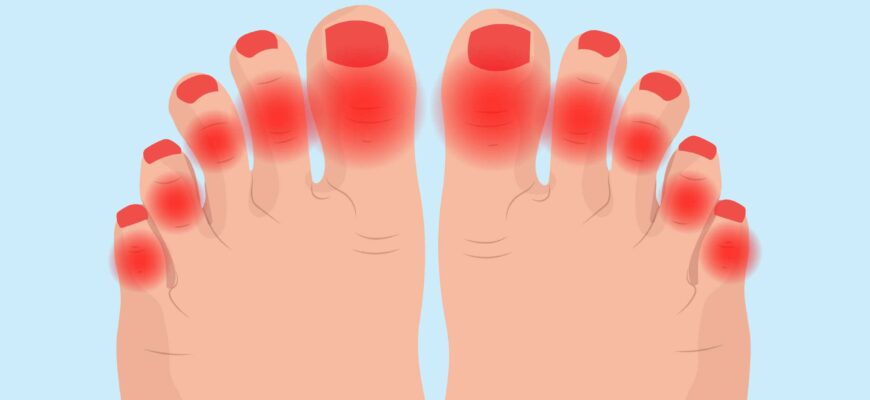
Toe pain can come from tight shoes, gout, bunions, ingrown nails, or nerve problems.
Common causes
- Tight or ill-fitting shoes.
- Gout, especially in the big toe, with sudden, intense pain.
- Bunions and hammer toes.
- Ingrown toenails.
- Arthritis.
- Injuries and stress fractures.
- Neuropathy (diabetes): burning or tingling.
- Morton’s neuroma.
- Fungal infection.
Home care
Rest, ice, wider shoes and over-the-counter pain relief.
See a doctor if
Pain is severe, the toe is hot, red or swollen, or you have diabetes and any foot injury.
Prevention
Wear shoes with room in the toe box, trim nails straight and check feet daily.

Gout
Needs medical treatment.
Why toes hurt
The toes bear force with every step, and they contain many joints, nerves and small bones. Pain may come from shoes, injury, arthritis, nerve problems or circulation.
Common causes
- Ill-fitting shoes: tight toe boxes and high heels compress the toes and cause blisters, corns and calluses.
- Ingrown toenail: the edge of the nail grows into the skin, causing redness and swelling, mostly in the big toe.
- Bunions and hammertoes, which are deformities that affect about 23% of adults.
- Stubbed toe or fracture. Toe fractures are common and are treated with buddy taping.
- Gout: sudden, severe pain, redness and swelling, often in the big toe joint, caused by uric acid crystals.
- Osteoarthritis and rheumatoid arthritis.
- Turf toe, a sprain of the big toe joint in athletes.
- Morton’s neuroma: burning pain between the third and fourth toes.
- Peripheral neuropathy from diabetes, with tingling and burning.
- Athlete’s foot and fungal nails.
- Raynaud’s phenomenon and frostbite: cold, color-changing toes.
- Peripheral artery disease, which reduces blood flow.
Home care
- Rest, ice for 10 to 15 minutes, compression and elevation.
- Wear wide, supportive shoes with space for the toes.
- Buddy tape a stubbed toe to its neighbor.
- Take ibuprofen or acetaminophen.
- Trim nails straight across.
- Soak an ingrown nail in warm water and lift the edge with clean cotton.
See a doctor if
Pain is severe, there is a deformity, the toe is blue or cold, swelling does not improve in a few days, there are signs of infection (pus, red streaks, fever), numbness, or you have diabetes and any foot sore. Diabetic foot ulcers can lead to amputation if neglected.
Gout
Gout affects about 9 million US adults. Attacks peak within 12 to 24 hours and last 3 to 10 days. A doctor can confirm it by testing joint fluid and blood uric acid. Treatment includes NSAIDs, colchicine or steroids for attacks, and allopurinol for prevention.
Prevention
Choose well-fitting shoes, replace worn athletic shoes every 300 to 500 miles, and strengthen foot muscles.
Foot structure and typical conditions
Each foot has 26 bones and 33 joints, and the toes take much of the force during walking, which makes them prone to injury. Gout often starts in the big toe, where a joint swells, turns red and hurts severely, often overnight, due to uric acid crystals. It affects about 9 million US adults. Bunions, hammertoe, ingrown toenails, fungal infection, arthritis and stress fractures are other common causes. Tight shoes and high heels are linked to many problems, and the toe box should leave about half an inch beyond the longest toe. Diabetes can cause neuropathy with tingling and burning toes, and poor circulation from peripheral artery disease can cause cold, painful toes. A toe that is black, blue, very cold or has an open sore needs prompt care, especially in people with diabetes.
Based on data from the American Podiatric Medical Association and the CDC







